BEAUTY EDITORIALBEAUTY EDITORIALBEAUTY EDITORIALBEAUTY EDITORIAL

Beauty Culture

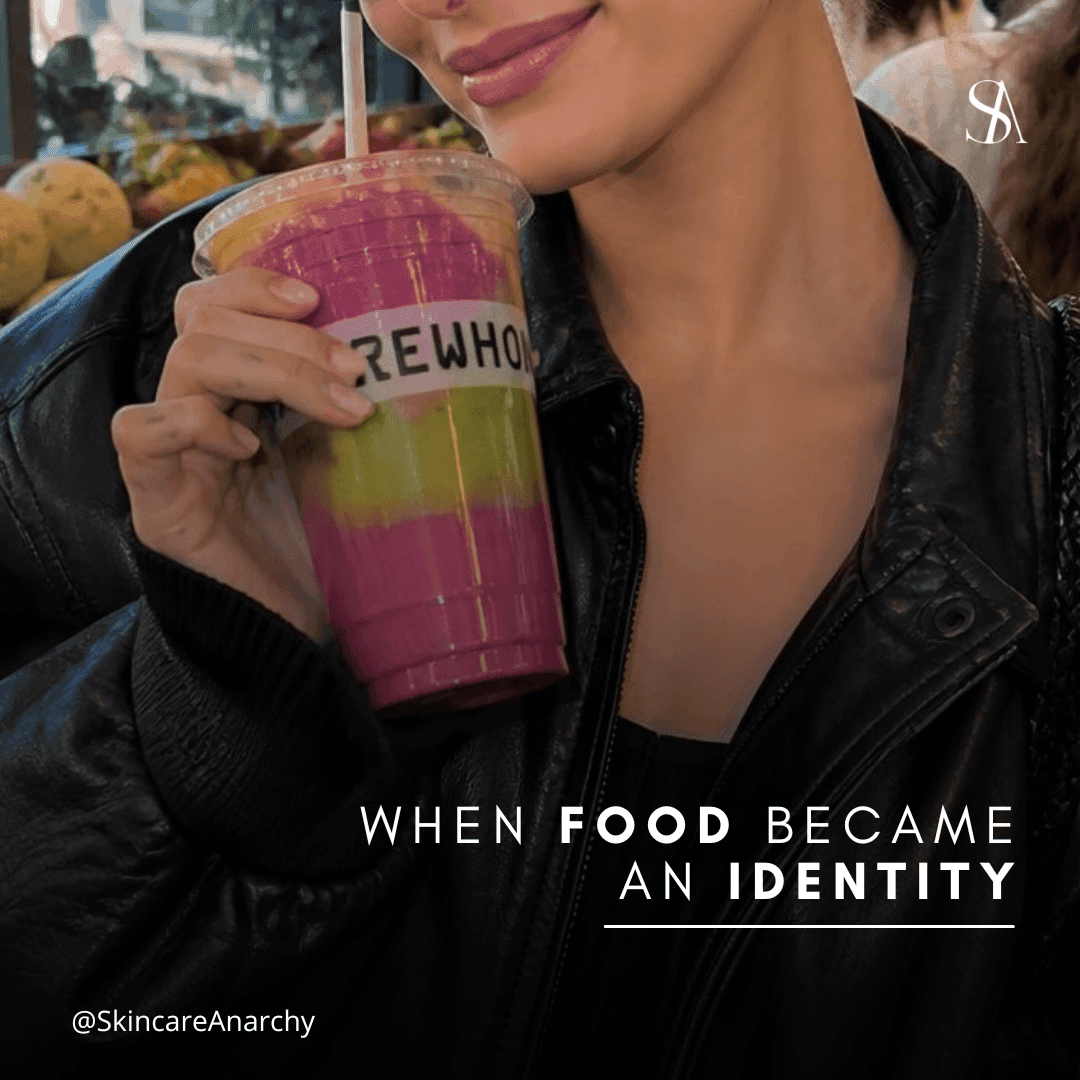
    When Food Became an Identity

    Why a generation raised on ingredient labels is asking bigger questions about what ends up on the plate

    A grocery trip once required remarkably few questions. Milk was milk. Bread was bread. Eggs came from chickens, vegetables came from farms, and most people spent little time thinking about the systems that existed beyond the supermarket shelves. Food occupied a practical place in everyday life. It was fuel, tradition, comfort, convenience, and routine. Few shoppers paused to investigate supply chains, scrutinize ingredient panels, or consider the ethical, environmental, and cultural implications hidden inside an ordinary shopping cart.

    Where did all that simplicity go?

    Today, food is no longer simply something people eat. It is something people research, debate, photograph, document, optimize, and use to communicate values. Consumers do not merely ask whether something tastes good. They ask whether it is organic, regenerative, locally sourced, plant based, gluten free, minimally processed, high protein, hormone free, seed oil free, or ethically produced. Entire online communities have formed around ingredients, sourcing, processing, and nutrition, turning what was once a private decision into a public conversation.

    Nowhere is that more visible than on social media. The “what I eat in a day” video, once a niche format for fitness influencers, has become one of the most recognizable genres online, with creators narrating breakfast, lunch, and dinner as though each meal were a statement of principle. Viewers study the plates, question the portions, and debate the choices in the comments. Eating has become something people perform as much as something they do.

    The modern grocery store contains more information than previous generations would have known what to do with, and people are reading all of it. In many ways, the ingredient label has become one of the most scrutinized documents in contemporary life.

    That scrutiny does not stop at the kitchen. The same consumer who turns over a protein bar to read the back is now doing the same with a serum, a sunscreen, a shampoo, or a bottle of laundry detergent. The clean beauty movement, the rise of ingredient decoding apps, and a growing appetite for brands that publish full formulas all reflect the same instinct. Industries that once operated with little public scrutiny are being asked to explain themselves, and food is where many people first learned to ask.

    The modern consumer has become an investigator, and the kitchen is where the investigation usually begins.

    For many people, the journey starts with necessity. A food allergy. A dietary restriction. A medical diagnosis. An ingredient that suddenly has to be avoided. What starts as a practical concern often turns into something much larger, because once people begin reading labels, they begin asking questions. Where did this food come from? Why are these ingredients here? How is this product made? What exactly am I putting into my body every day? Those questions rarely stay confined to a single ingredient.

    What begins as an effort to avoid one thing often becomes an examination of everything else.

    The closer consumers look, the more complicated the food landscape appears. Grocery aisles stretch for rows, filled with products containing ingredients many people struggle to pronounce, foods engineered for convenience, and meals designed to survive transportation, storage, and months of shelf life. According to the Centers for Disease Control and Prevention, ultra processed foods made up 53 percent of the calories American adults consumed between 2021 and 2023, and nearly 62 percent for children and teens (CDC, 2025). At the same time, social media, podcasts, investigative journalism, and documentaries such as Seaspiracy and Dominion have created unprecedented access to information about agriculture, food manufacturing, animal welfare, sustainability, and food waste.

    The result is a generation, millennials and Gen Z in particular, that appears far less willing to consume blindly.

    That shift helps explain why movements that once lived at the margins of food culture are now mainstream. Veganism, vegetarianism, regenerative agriculture, organic farming, ultra processed food awareness, local food systems, and environmental sustainability are often discussed as separate subjects, but they share the same underlying impulse: people want to know more about what they are eating.

    More importantly, they want to know what their food choices say about them. For many, food is no longer functioning purely as nutrition. It has become an extension of identity.

    Throughout history, people have expressed values through clothing, religion, politics, music, and lifestyle. Food has now joined that list. Eating has become one of the most visible ways people communicate beliefs about health, ethics, environmental responsibility, animal welfare, and personal wellbeing.

    A plant based eater may be expressing concerns about animal agriculture. Someone who buys exclusively local produce may be supporting regional food systems. Someone who prioritizes organic products may be responding to concerns about pesticides and environmental health. Others find their identity in the protein revolution that has put protein into coffee, cereal, popcorn, and pasta, and turned cottage cheese into an unlikely viral star. Still others have made avoiding ultra processed food a guiding philosophy.

    Food as status has followed close behind. In Los Angeles, a single smoothie at Erewhon can cost close to $20, and the store’s celebrity collaborations, most famously Hailey Bieber’s Strawberry Glaze Skin Smoothie, turned a grocery purchase into a cultural artifact. The cup itself became the point. Carrying it signaled something about who you were, what you valued, and what you could afford.

    In each case, the food becomes part of a larger story.

    Veganism offers one of the clearest examples. It is often discussed as a dietary choice, but for many people it functions as an ethical framework through which questions about animal welfare, environmental stewardship, and personal responsibility become interconnected. Its appeal extends beyond removing animal products from a plate. It reflects a desire to understand how food reaches consumers and what consequences exist along the way.

    Environmental concerns add another layer. Food waste, land use, water use, and emissions are now regular topics in conversations about diet. Questions that once seemed reserved for policy experts appear in everyday life, and consumers who never considered the environmental footprint of dinner a decade ago now encounter those discussions daily online.

    Health concerns have expanded the conversation further still. Interest in minimally processed foods and skepticism toward highly processed products reflect broader worries about chronic disease, inflammation, and long term wellness, and some of those worries have meaningful research behind them. A 2024 umbrella review in The BMJ associated higher ultra processed food consumption with 32 adverse health outcomes, with the most convincing evidence for cardiovascular death and type 2 diabetes, though the strength of evidence varied considerably across outcomes (Lane et al., 2024).

    Not every concern holds up equally well, however. The seed oil panic that has spread across social media is a useful example. Claims that canola, sunflower, and soybean oils are uniquely toxic have gained enormous traction online, yet major health organizations, including the American Heart Association, have long held that replacing saturated fats with polyunsaturated fats like those found in these oils is associated with lower cardiovascular risk. The raw milk debate follows a similar pattern, with enthusiasm online running well ahead of the evidence and well ahead of what food safety experts consider prudent. Reading the label is only the first step. Interpreting it correctly is harder.

    What gives this moment its cultural weight is not that more people are becoming vegan, vegetarian, gluten free, organic, or regenerative. It is that they are asking questions about ingredients, sourcing, responsibility, values, and transparency.

    For decades, consumers largely trusted institutions to decide what belonged in food. Today’s consumers often place greater trust in their own research, their own communities, and their own ability to investigate. That independence carries real risks, as the spread of misinformation makes clear. But it also reflects something difficult to dismiss: fewer people are willing to remain passive participants in the systems that shape their daily lives.

    The future of food may depend less on whether consumers choose animal products, plant based alternatives, or any particular dietary philosophy, and more on whether they continue demanding visibility into systems that once operated with little public attention, and whether they hold what they find to the same standard of scrutiny they apply to the label.

    Once people start reading the label, it becomes very difficult to stop asking questions.
    We Grew Up With Them: Why the deaths of young celebrities feel increasingly personal to an entire generation

    There was a time when the death of a young celebrity felt like a cultural shockwave because it seemed so unusual. Certain losses became landmarks in public memory, not only because of who died, but because events like that felt rare enough to interrupt the broader culture around them. People remembered where they were when they heard about James Dean, River Phoenix, Aaliyah, or Heath Ledger because those losses felt singular, tragic, and somehow distant from ordinary expectations of how a life was supposed to unfold. The feeling today is different. Over the last several years, audiences have found themselves returning to the same ritual again and again. Cameron Boyce. Naya Rivera. Angus Cloud. Aaron Carter. Liam Payne. Hayden Panettiere. Each loss belongs to a different person, a different career, and a different story. Yet together they have created a growing sense that an entire generation keeps encountering the same kind of headline, the same disbelief, and the same immediate reaction: Weren’t they just here? When news of Hayden Panettiere’s death began spreading, the internet responded in a way that has become increasingly familiar. Scenes from Remember the Titans, Heroes, and Nashville resurfaced across social media. Childhood interviews began circulating again. Photographs from different decades appeared side by side. Before many people knew the details, they were already revisiting a life they had spent years watching unfold in public. Within hours, millions of people had collectively stepped backward in time. For many millennials and members of Gen Z, these public figures were never confined to one film, one television show, one album, or one cultural moment. They existed across decades. People first encountered them as children or teenagers and then continued encountering them through interviews, magazine covers, social media posts, red carpets, podcasts, public struggles, reinventions, recoveries, disappearances, and comebacks. Audiences did not simply watch performances. They watched lives. There is a profound difference between remembering someone’s work and remembering the years that surrounded it. A generation that grew up with Disney Channel stars remembers more than the shows themselves. Cameron Boyce remains connected to a period of childhood that now feels impossibly distant. Liam Payne represents not only music, but an entire era of adolescence defined by One Direction. Hayden Panettiere remains intertwined with early-2000s television, movie nights, magazine covers, and the unusual experience of watching someone grow up while an audience grew up alongside them. Naya Rivera, Angus Cloud, Aaron Carter, and countless others occupy similar places in cultural memory. Their careers became attached to specific chapters of life that audiences still remember vividly. One of the strangest consequences of modern fame is that public figures frequently remain frozen at the age audiences first encountered them. The actor remembered from a favorite television series remains a teenager. The musician associated with high school remains the age they were when everyone first learned the lyrics. The celebrity who once seemed endlessly present becomes fixed in memory while real time continues moving forward almost unnoticed. What makes the current moment feel different is not simply the way audiences remember celebrities but the growing sense that these losses keep happening, and the question that follows is often immediate and deeply emotional: Why does it feel like we keep losing so many young and talented people? The answer is not a simple one, and it is certainly not the same for every tragedy. What has changed, however, is the way audiences experience these lives long before they are gone. Previous generations often encountered celebrities through finished work. An audience knew the actor from a film, the musician from an album, or the performer from a television appearance. The relationship existed primarily through what was created. Today, public life unfolds in real time. Audiences witness careers as they happen. They follow interviews, social media posts, public struggles, reinventions, disappearances, recoveries, and returns. They watch people succeed, fail, age, adapt, and evolve. Visibility has become so constant that celebrities no longer exist solely through their work. They exist through stories and stories invite investment. That shift helps explain why the public response to these deaths has become so expansive. When news of Hayden Panettiere’s death spread, conversations quickly moved beyond her performances and toward recovery, postpartum depression, domestic violence, resilience, advocacy, and the difficult realities of growing up under public scrutiny because those subjects had become part of the broader story people associated with her life. The same pattern has emerged following other losses in recent years. The conversation rarely remains confined to a filmography or a discography. It expands outward into questions about fame, mental health, addiction, pressure, burnout, and what it means to spend years living under observation. Part of the reason those conversations resonate so deeply is that the entertainment industry itself has become increasingly candid about challenges that were once hidden from public view. A 2024 study of professionals working in television and film found that 76 percent reported experiencing mental health issues during or after production, while 89 percent described the industry as not being a mentally healthy place to work. Sixty percent reported having considered leaving because of concerns related to their mental well-being. Elsewhere, research examining performers and entertainment workers has found elevated rates of anxiety and depression compared with the general population, leading to ongoing discussions about instability, public scrutiny, demanding schedules, financial uncertainty, and the psychological impact of highly visible careers. Nonetheless, none of those figures explain a single loss. What they do reveal is that many of the conversations audiences have after a tragedy did not begin with the tragedy itself. They were already happening beneath the surface. The loss simply brings them into sharper focus. That may be why these deaths increasingly feel larger than the loss of a celebrity. People are not responding solely to the end of a life. They are responding to the realization that so many of these lives seemed to contain so much unfinished possibility. The actor whose most interesting work may still have been ahead. The musician who had not yet reached the next chapter of a career. The public figure who was still evolving, still recovering, still becoming someone new. The grief often centers on absence, but it is equally attached to unrealized futures, like the version of that person the world never got the chance to meet. That is what gives these losses their particular weight. They arrive not only as endings, but as reminders of how much talent, creativity, resilience, and possibility can exist within a life that still feels unfinished. And when enough of those losses accumulate within a relatively short period of time, the feeling becomes cultural as much as personal. It begins to feel as though the world is repeatedly being asked to say goodbye to remarkable people long before their time was up, and long before everyone else was prepared to let them go.

    What Patients Know About Fillers Now That They Didn’t Ten Years Ago

    There was a period when fillers occupied a remarkably uncomplicated place in beauty culture. The treatment existed within a landscape that rewarded visible transformation, where fuller lips, sharper cheekbones, stronger jawlines, and more pronounced contours were not simply accepted outcomes but often the outcomes people actively sought. As aesthetic medicine became increasingly mainstream and social media amplified images of dramatic enhancement, the procedure carried a sense of aspirational visibility. Patients often arrived at consultations focused on what could be added, how noticeable the result might be, and how much difference a single syringe could make. The conversation surrounding fillers today feels markedly different. The persistence of demand is notable. Data from the International Society of Aesthetic Plastic Surgery continues to place injectable procedures among the most common non-surgical aesthetic interventions worldwide, suggesting that increasing scrutiny has not necessarily reduced interest in treatment (International Society of Aesthetic Plastic Surgery, 2025). Therefore, we understand the treatment itself remains widely used. Injectable procedures continue to rank among the most commonly performed non-surgical aesthetic treatments worldwide, with millions of procedures performed annually despite growing public discussions surrounding migration, dissolution, and long-term maintenance (International Society of Aesthetic Plastic Surgery, 2025). The language surrounding the treatment, however, has evolved considerably. Questions that once centered on volume now frequently center on longevity, migration, dissolution, facial balance, and what repeated intervention may look like over the course of years rather than months. Terms that were once largely confined to conference halls, dermatology journals, and injector training sessions now circulate freely across social media feeds, podcasts, and online communities, where patients compare MRI scans, discuss filler fatigue, debate practitioner philosophies, and document their experiences with filler removal just as openly as previous generations documented enhancement. What makes this shift particularly interesting is that the product itself has changed far less than the people receiving it. The modern filler patient arrives at a consultation carrying significantly more information, significantly more questions, and often significantly more skepticism than the patient who helped fuel the injectable boom of the 2010s. In many ways, the most important development in fillers over the last decade has not been a new technique, a new product, or a new trend. It has been the emergence of a consumer who is no longer satisfied with simply seeing results, but increasingly wants to understand how those results happen, what they may look like years later, and whether the stories surrounding them are as straightforward as they once seemed. When More Was More To understand why the filler conversation sounds so different today, it helps to remember what made fillers appealing in the first place. There was a period when visibility itself carried value. Cosmetic procedures were becoming increasingly normalized, but they still retained enough novelty to feel aspirational. Fuller lips, stronger cheekbones, and sharper contours were not simply aesthetic preferences. They often functioned as signals, communicating participation in an emerging beauty culture that social media was actively amplifying. The most successful results were frequently the most noticeable ones, and the before-and-after photograph became one of the beauty industry's most powerful forms of evidence. The conversations surrounding fillers reflected those priorities. Lips were often discussed independently from cheeks, while cheeks were discussed independently from jawlines, as though the face existed as a series of separate projects rather than a structure whose features influenced one another. The products themselves reflected that approach. During the height of the filler boom, many patients became familiar with brand names in the same way previous generations became familiar with skincare products. Hyaluronic acid fillers such as Juvederm and Restylane dominated discussions due to their versatility across different treatment areas, while products were often selected based on the specific type of enhancement being pursued. Softer formulations were frequently used for lips and areas requiring flexibility of movement, whereas firmer fillers were often chosen for structural support in the chin, jawline, or cheeks. Over time, however, the conversation shifted away from individual products and toward placement strategy, facial balance, and long-term planning. Patients became increasingly interested in why a particular filler was selected rather than simply which filler was used. What often gets forgotten is that the information environment looked very different. Consumers certainly had access to the internet, but very few entered consultations equipped with the vocabulary that now feels commonplace. Most people encountered fillers through celebrity culture, beauty publications, practitioner marketing, and carefully selected before-and-after photography. They understood what fillers could do in the short term, but they were rarely encouraged to think about what fillers might look like after years of maintenance, repeated appointments, or shifting beauty standards. That distinction shaped more than consumer expectations. It shaped the very questions people asked. The conversation was less about longevity, migration, dissolution, or facial balance because those were not yet the concerns dominating public attention. The focus remained largely on the result itself rather than the longer story surrounding it, and for many patients the defining question was not whether intervention would remain harmonious over time but simply how much visible change could be achieved in the present. The Information Shift If the 2010s were defined by accessibility, the years that followed were increasingly defined by information. The injectable boom unfolded alongside a transformation in how consumers learned about aesthetic medicine. Earlier generations often encountered fillers through practitioner websites, beauty magazines, celebrity interviews, and carefully curated before-and-after imagery. The average patient usually arrived at a consultation with a general understanding of what fillers could achieve, but significantly less understanding of how fillers behaved over time. Since then, that dynamic has changed dramatically. The same platforms that helped normalize fillers also accelerated access to information about complications, side effects, reversals, and long-term outcomes. A patient considering treatment today is unlikely to rely on a single consultation for information. Instead, that patient may arrive having watched months of injector content, compared treatment journeys across social media, read practitioner debates, joined online communities, and consumed years of aesthetic commentary before ever speaking to a provider. The result has been a consumer who is at once more informed and more exposed to contradiction. For every video celebrating lip filler, another questions whether filler migration is being taken seriously enough. For every practitioner advocating maintenance, another argues that repeated treatments should be approached more conservatively. For every patient documenting a successful outcome, another documents a decision to dissolve filler entirely. At the same time, patients who once focused almost exclusively on immediate results became increasingly interested in longevity, maintenance, and the accumulated effects of years of intervention, reframing fillers as something to be evaluated over time rather than simply admired in the moment. Dermatologist Uwe Wollina and plastic surgeon Alberto Goldman note that filler migration, once largely discussed within professional circles, became significantly more visible as public awareness increased, bringing previously niche conversations about technique, anatomy, and long-term outcomes into mainstream aesthetic discussions (Wollina and Goldman, 2023). The growing visibility of those conversations fundamentally altered patient expectations. What many patients did not discuss ten years ago were complications that practitioners routinely considered. Vascular occlusion, while rare, represents one of the most serious filler-related risks because it involves interruption of blood flow and, in some circumstances, can lead to tissue injury or visual complications if not recognized and treated quickly. Although uncommon, broader public awareness of these risks has contributed to the more cautious tone that increasingly surrounds injectable treatments. What was once framed primarily as a cosmetic procedure is now more frequently understood as a medical procedure with aesthetic outcomes. Additionally, consumers increasingly stopped evaluating fillers as a single procedure and started evaluating them as a long-term relationship with a product that exists within living tissue. Many practitioners have observed the same shift. Rather than arriving with reference photos alone, patients increasingly arrive with research, screenshots, studies, and concerns that reflect a broader understanding of aesthetic medicine. The expertise of injectors remains rooted in anatomy, technique, and clinical judgment, but patients have become experts in something else entirely: documentation. They have access to thousands of outcomes, years of photographic evidence, and communities willing to discuss experiences openly. When Patients Learned Fillers Might Last Longer Than They Were Told One of the most consequential developments in the modern filler conversation arrived not through a new product, but through a new question. For years, fillers were typically described through relatively simple timelines. Patients were often told that hyaluronic acid fillers would gradually dissolve over a matter of months, with longevity varying depending on the product, anatomy, metabolism, and placement. The treatment was discussed as temporary, which helped shape how consumers thought about maintenance and risk. More recently, advances in imaging technology complicated that narrative. MRI and ultrasound imaging began documenting residual filler years after treatment in some patients, raising questions about persistence, tissue behavior, and how long filler may remain detectable under certain circumstances. In many cases, the images challenged assumptions patients had repeated for years. Consumers who had been told to think about fillers in terms of months suddenly found themselves looking at evidence suggesting that traces of treatment could remain detectable much longer under certain circumstances. The images themselves became influential because they transformed a theoretical discussion about longevity into something patients could actually see. The emerging discussion did not prove that filler behaves identically in every patient, nor did it suggest that all filler remains indefinitely. What it did do was expand the timeline through which patients evaluated treatment. Suddenly, conversations about longevity became more complicated. Consumers were no longer asking only how long a result would be visible. Increasingly, they were asking what "gone" actually meant. And this new emphasis also coincided with greater public awareness of rare but significant complications. Vascular occlusion, while uncommon, became more widely discussed through practitioner education and social media, introducing consumers to conversations about anatomy that would have been unfamiliar to many patients a decade earlier. Increasingly, consultations began incorporating discussions not only about outcomes, but also about risk, reversibility, and the importance of provider experience. This distinction fundamentally changed how many people approached maintenance, touch-ups, migration concerns, and dissolution decisions. When Migration Entered the Conversation For a long time, fillers were evaluated almost entirely through the lens of immediacy. Most conversations about injectable treatments unfolded within a timeline measured in days or weeks, largely because those were the results patients could actually see. Swelling subsided, volume settled, photographs were taken, and the treatment gradually disappeared into the background of everyday life. Years later, that began to change as enough time passed for a generation of filler patients to look backward. Social media, perhaps unintentionally, created an archive of aesthetic decisions, allowing consumers to compare photographs taken five, ten, and sometimes even fifteen years apart. Images that had originally been posted to celebrate results were revisited with a different set of questions. Patients who once focused primarily on what filler added to the face became increasingly interested in what happened after years of maintenance, repeated appointments, changing preferences, and evolving beauty standards. It was within that environment that migration entered mainstream beauty culture. Practitioners had long understood that anatomy, placement, product characteristics, facial movement, tissue quality, and time could all influence how fillers behave after injection; but things changed when access to this information reached consumers. Research reviewed by dermatologist Uwe Wollina and plastic surgeon Alberto Goldman identified filler migration as a recognized phenomenon that can occur across multiple filler types and, in certain cases, years after treatment has taken place (Wollina and Goldman, 2023). The review identified reports of migration across multiple anatomical regions, with the lips, nose, nasolabial folds, forehead, and tear troughs among the areas most frequently discussed. Perhaps most significantly, the timing varied dramatically. Some cases appeared relatively quickly, while others did not become apparent until years after the original treatment, which helped reinforce the growing consumer focus on long-term outcomes rather than immediate results (Wollina and Goldman, 2023). What made migration culturally significant, however, was not simply the possibility that filler could move. It was the way the discussion altered how patients thought about aesthetic treatments altogether. For many consumers, migration became one of the first moments in which the short-term story and the long-term story of fillers appeared to diverge. The procedure was no longer being judged exclusively by what happened immediately after an appointment. Increasingly, patients wanted to understand what happened after the swelling resolved, after the photographs were posted, and after years of maintenance accumulated. Questions that had once focused on how a face might look next week gradually expanded into questions about how repeated intervention might influence appearance over the course of a decade. The shift was significant because it asked patients to think about fillers in a way they largely had not before. Rather than evaluating a treatment as a single event, they began evaluating it as part of a much longer relationship between anatomy, aging, aesthetics, and time. In many ways, migration became less important as a complication than it did as a question. It forced consumers to start evaluating fillers through the lens of time, and once that happened, the entire conversation began to change. Nonetheless, not every practitioner believes public concerns surrounding migration reflect a crisis. Some injectors argue that social media amplified worst-case examples and encouraged consumers to interpret every visible change as migration. Others believe the public discussion was necessary because it pushed long-term outcomes into a conversation that had historically prioritized short-term results. The disagreement itself reflects how much the filler conversation has evolved. The debate has transformed into how fillers should be used, monitored, and maintained over time. The Rise of Dissolving One of the clearest signals that the filler conversation had changed arrived when patients began documenting not what they were adding, but what they were removing. For years, dissolution largely occupied a corrective role within aesthetic medicine. It existed in the background of the industry, used when outcomes were unsatisfactory, placement required adjustment, or complications needed to be addressed. It was rarely discussed publicly because the attention remained focused on enhancement itself. The procedure that generated interest was filler. Dissolving was simply what happened afterward if something went wrong. That dynamic began shifting once patients started revisiting aesthetic decisions that had been made years earlier. Social media once again played an important role, not because it introduced dissolving as a technique, but because it gave consumers a way to compare long-term outcomes across thousands of faces simultaneously. Individuals began sharing dissolution journeys with the same openness that earlier generations had shared transformation journeys. What emerged was not necessarily a rejection of filler, but a growing curiosity about what years of maintenance looked like when viewed collectively rather than one appointment at a time. Many of the most widely viewed dissolution stories did not begin with complications but rather the reassessments. Patients described looking through old photographs and realizing that the aesthetic goals they once pursued no longer reflected the way they wanted to look. Others spoke about wanting to understand what their unaltered anatomy looked like after years of intervention. Some patients began reassessing not only individual outcomes, but the broader aesthetic ideals that had influenced those outcomes in the first place. In doing so, dissolving became less about correction and more about reevaluation. The distinction is important because the rise of dissolution is often interpreted as evidence that consumers have turned against fillers. The reality appears more nuanced. The procedure remains widely performed, yet the framework through which many patients evaluate it has become more complicated. Rather than focusing exclusively on what can be added, consumers increasingly ask what should be added, how long it should remain, and whether the cumulative effect of multiple treatments still aligns with their aesthetic goals that may be current ones or from when the procedure first took place. Plastic surgeons and injectors have observed a similar shift. Discussions that once revolved around volume often center increasingly on proportion, restraint, and long-term planning. In that sense, dissolving became significant not because it replaced fillers, but because it expanded the timeline through which fillers were evaluated. The question quietly shifted from whether someone liked filler as a procedure to whether they liked what years of filler looked like when viewed in retrospect. Those are very different questions, and the second may explain far more about the current state of aesthetics than the first ever could. When Balance Replaced Volume One of the most significant consequences of increased patient literacy was that the aesthetic ideal itself began to change. As conversations surrounding migration, longevity, and dissolution became more common those preferences over obvious visibility changes began to shift. And the question was no longer simply how a face might look after treatment, but how repeated intervention might interact with aging, anatomy, and changing aesthetic preferences over time. Social media played a complicated role in this transition. The same platforms that helped normalize fillers also exposed patients to a wider range of outcomes than previous generations had ever seen. Practitioner education, patient documentation, migration discussions, dissolution journeys, and long-term comparisons accumulated alongside the aspirational content that had originally fueled the injectable boom. As consumers gained access to more information, the conversation became increasingly focused on maintenance, restraint, and longevity. The growing popularity of terms such as natural, balanced, and undetectable reflects that shift, although none of those words are particularly straightforward. A generation ago, natural often implied minimal intervention. Today, it frequently describes the appearance of minimal intervention. Patients continue to invest significant time, money, and effort into aesthetic treatments, yet the success of those treatments is increasingly judged by how invisible they appear. Interestingly, demand for injectables has remained remarkably resilient even as discussions surrounding migration, dissolving, and long-term maintenance have become more prominent. Rather than reducing interest in treatment, greater awareness appears to have changed how consumers define successful treatment. The aspiration increasingly seems to be invisibility rather than enhancement. And this has not reduced the complexity of aesthetic medicine. In many ways, it has increased it. Achieving outcomes that look effortless often requires more planning, greater anatomical understanding, and a longer-term approach than creating visibly enhanced results. Rather than focusing on individual features in isolation, many practitioners now discuss facial balance, structural support, movement, tissue behavior, and how interventions performed today may influence appearance years later. The result is an aesthetic culture that increasingly values plausibility over visibility. Some practitioners have observed that younger patients now arrive asking specifically to avoid certain visual markers associated with earlier filler trends. In many consultations, references to "overfilled" results have become almost as common as references to desired outcomes, suggesting that aesthetics increasingly develops in reaction to its own previous ideals. Nowadays, the goal is often to look like oneself under slightly better circumstances, a subtle but meaningful distinction that may explain why the filler conversation sounds so different today than it did a decade ago. Beyond Fillers For all the discussion surrounding migration, dissolution, overfilling, and technique, the most interesting change may be that fillers are no longer evaluated solely through results. Increasingly, they are evaluated through context. Consumers want to know who performed the treatment, what product was used, how often maintenance occurred, what the face looked like before, and what it looked like years later. Information that once belonged almost exclusively to practitioners now circulates freely among patients, creating a landscape in which aesthetic decisions are documented, revisited, and debated long after the appointment itself has ended. That shift has altered more than injector consultations. It has changed the role fillers occupy within beauty culture. A decade ago, the treatment was often discussed through the language of transformation. Today, it is more likely to be discussed through the language of longevity, anatomy, and personal preference. The conversation has become less about what can be added and more about what should be added, when intervention improves balance, and when it begins to compete with it.Perhaps that is why fillers continue to generate so much discussion. They sit at the intersection of medicine, aesthetics, aging, identity, and technology, making them almost impossible to reduce to a single opinion. The more patients learn, the less straightforward the conversation becomes. In a category that was once defined by volume, the lasting impact of fillers may not be the product itself but the questions patients now feel empowered to ask about it.

    The Ingredients Consumers Believe In Most Often Have the Least Evidence

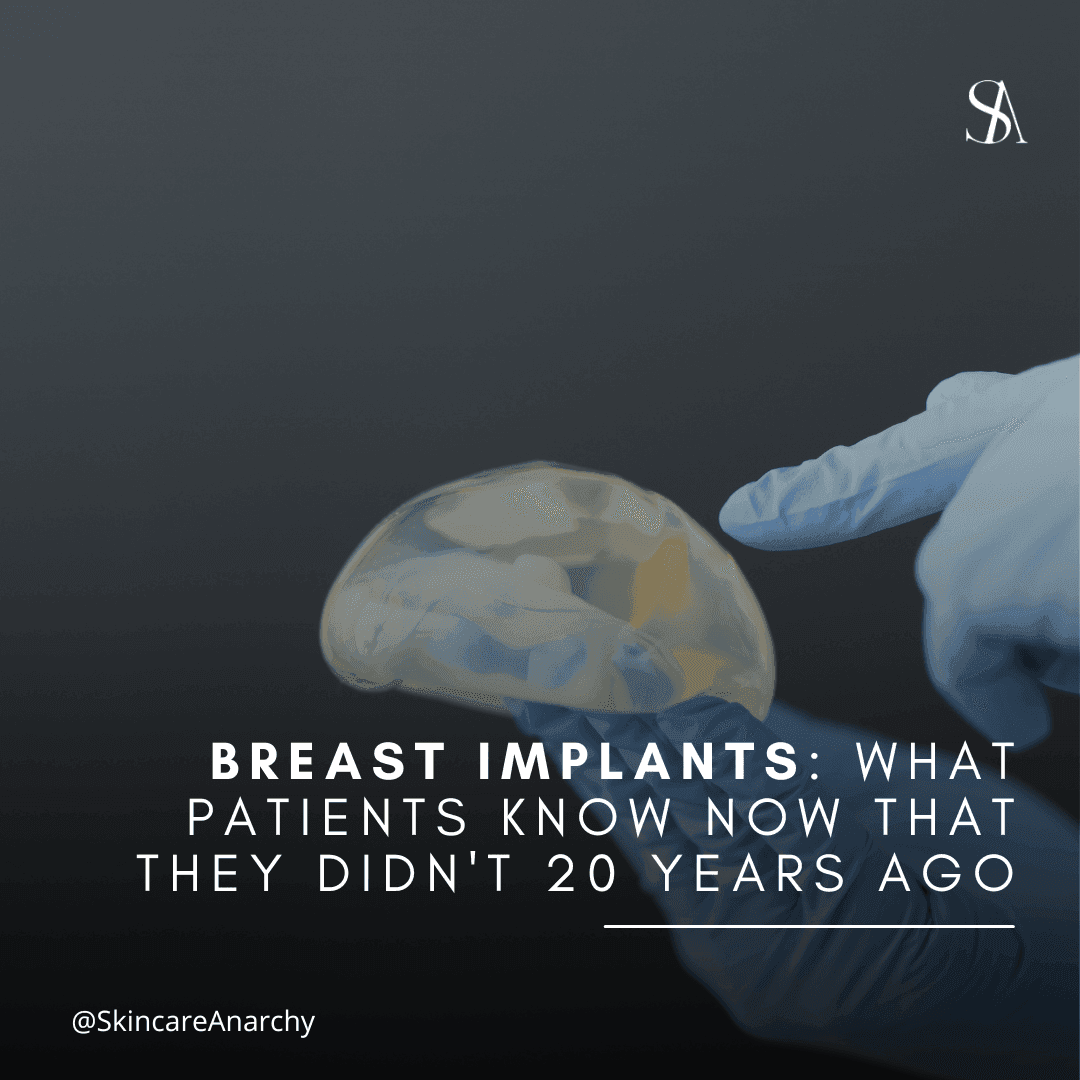
    Breast Implants: What Patients Know Now That They Didn't Twenty Years Ago

    Cancel Culture as a Way to Structure Attention: How Consumer Backlash Became Part of Modern Brand Marketing