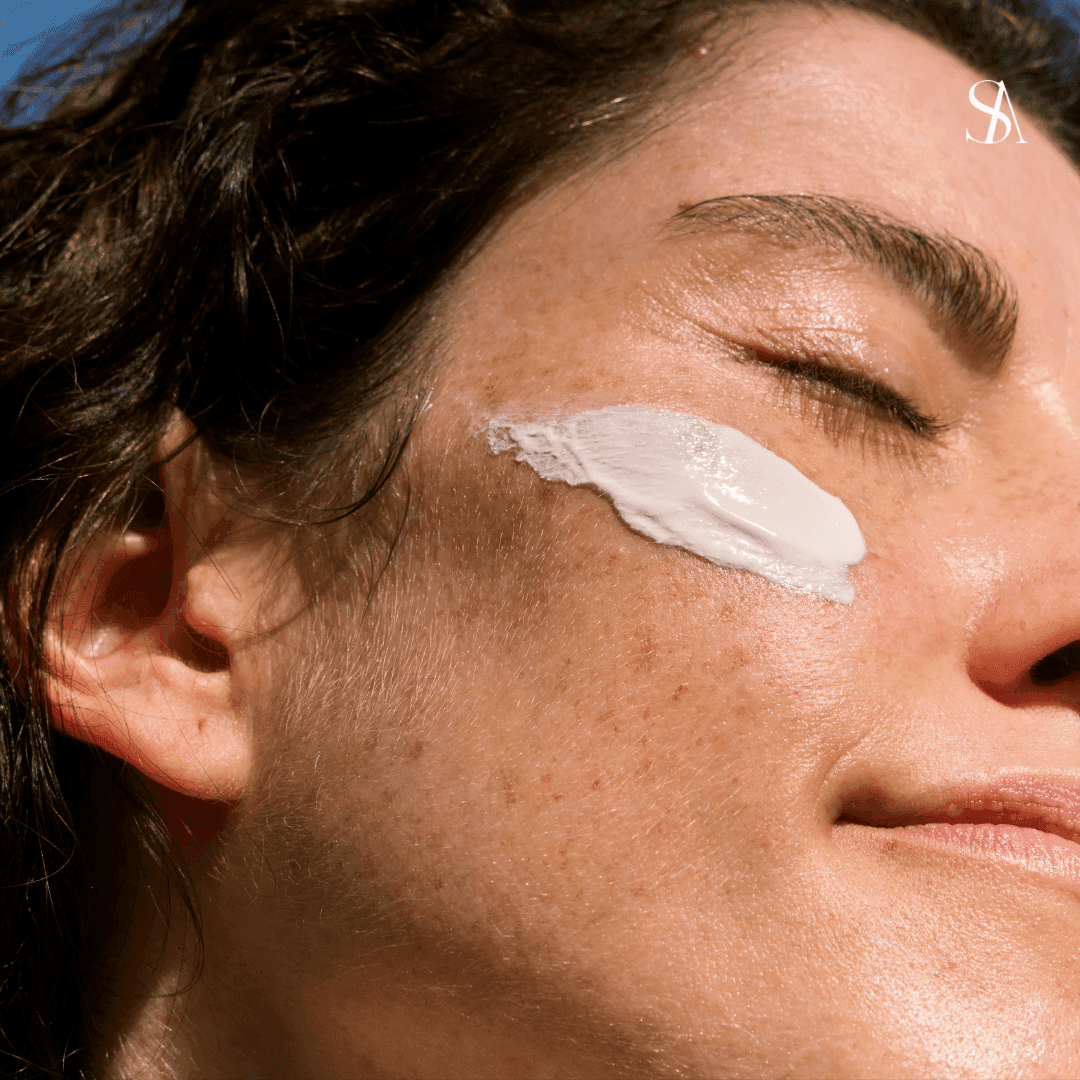
If you’ve ever applied a Korean sunscreen and wondered why it feels more like a serum than a traditional SPF, you’re not alone. Over the past decade, products such as Beauty of Joseon Relief Sun, Round Lab Birch Juice Moisturizing Sun Cream, and SKIN1004 Hyalu-Cica Water-Fit Sun Serum have developed reputations not simply for protection, but for how little they feel like sunscreen at all. The explanation most consumers encounter is that Korean brands have access to newer UV filters. That explanation is correct, but it is also incomplete. If UV filters alone determined texture, many of Korea’s best-selling sunscreens would feel nearly identical. Instead, some leave a dewy finish, others dry down matte, and some disappear almost entirely beneath makeup. The more interesting story is why some sunscreens feel so different from one another.
Some Korean sunscreens feel more like lightweight serums than traditional SPF, while others behave almost like moisturizers. Certain formulas leave a visibly dewy finish, whereas others dry down nearly matte. Even within Korea’s most popular sunscreens, the user experience can vary dramatically, from products that disappear beneath makeup to those that pill when layered with additional skincare.
The more interesting question is not why Korean sunscreens feel different from American sunscreens. It is why Korean sunscreens feel so different from each other.
Understanding that difference requires looking beyond UV filters and into the formulation decisions that shape the experience consumers actually notice.
The Filters Most Popular Korean Sunscreens Have in Common
Many of Korea’s best-selling sunscreens rely on similar UV filter systems.Products such as Beauty of Joseon Relief Sun, Isntree Hyaluronic Acid Watery Sun Gel, Round Lab Birch Juice Moisturizing Sun Cream, and SKIN1004 Hyalu-Cica Water-Fit Sun Serum all utilize combinations of newer-generation filters commonly found across Asian and European markets. These frequently include bemotrizinol (Tinosorb S), diethylamino hydroxybenzoyl hexyl benzoate (Uvinul A Plus), ethylhexyl triazone (Uvinul T150), and similar broad-spectrum filters known for their photostability and UVA coverage (Pantelic et al., 2023).
What makes these filters especially attractive to formulators is their flexibility as well as their protective capability. Older sunscreen systems often require heavier formulations to achieve desired performance and stability. Meanwhile, newer filters provide broader protection while giving formulators more freedom to create lightweight emulsions, fluid textures, and serum-like products (Pantelic et al., 2023).
This explains why many Korean sunscreens share a certain cosmetic elegance. However, it does not explain why two sunscreens using similar filters can feel completely different on the skin.
To understand that difference, consumers have to look beyond the active ingredients and toward the supporting formulation that ultimately determines how a sunscreen feels during wear.
Why Products With Similar Filters Feel Completely Different
One of the most surprising aspects of Korean sunscreen is how drastically different products can feel despite using similar UV filters.
Consider four of Korea’s most recognized sunscreen launches: Beauty of Joseon Relief Sun, Round Lab Birch Juice Moisturizing Sun Cream, Isntree Hyaluronic Acid Watery Sun Gel, and SKIN1004 Hyalu-Cica Water-Fit Sun Serum (Beauty of Joseon; Isntree; Round Lab; SKIN1004). While all four rely on modern UV filters with strong UVA protection, consumers rarely describe them in the same way.
Beauty of Joseon Relief Sun is often perceived as the richest of the group. Its formula incorporates rice extract, grain-derived ingredients, humectants, and emollients that create a moisturizing finish that many consumers with dry or normal skin appreciate. Users frequently describe it as feeling more like a daily moisturizer than a traditional sunscreen.
Round Lab Birch Juice Moisturizing Sun Cream occupies a middle ground. The inclusion of birch sap and a balanced humectant system creates hydration without the same level of richness. Consumers often describe it as comfortable, adaptable, and suitable for a wider range of skin types.
Isntree Hyaluronic Acid Watery Sun Gel leans even further toward hydration. Built around multiple humectants and a lighter emulsion structure, it often appeals to consumers seeking what many describe as a serum-like experience.
Meanwhile, SKIN1004 Hyalu-Cica Water-Fit Sun Serum has developed a reputation among consumers who dislike feeling sunscreen on their skin altogether. The formula emphasizes lightweight esters, centella, and hydration while minimizing residue.
The lesson for consumers is that two sunscreens may provide nearly identical protection while creating entirely different experiences on the skin.
What Actually Creates a Lightweight Texture
When consumers describe a sunscreen as feeling light, they are often responding to ingredients that are not UV filters at all.
Many modern Korean sunscreens rely heavily on humectants such as glycerin, butylene glycol, propanediol, and hyaluronic acid. These ingredients attract water and create hydration without the heavier feel associated with richer creams.
Formulators also utilize lightweight emollients such as dibutyl adipate, coco-caprylate, and synthetic ester systems that spread easily across the skin and leave minimal residue.
According to cosmetic chemists Gloria Lu and Victoria Fu, consumers often assume the UV filters themselves create a product’s texture when much of the sensory experience actually comes from the surrounding formulation system. The sunscreen filter may determine protection, but the emollients, humectants, solvents, film formers, and emulsifiers often determine how that protection feels during wear.
Korean dermatologist Dr. Sung Jae Jung has similarly noted that sunscreen adoption in South Korea has increasingly been shaped by daily wear expectations rather than occasional outdoor use (Jung, 2024). As sunscreen became incorporated into broader skincare routines, consumers began evaluating formulas using criteria traditionally reserved for moisturizers and cosmetic products. This shift encouraged formulators to think beyond protection alone and toward the overall user experience.
Why Some Korean Sunscreens Feel Like Serums
One of the most noticeable trends in Korean sun care has been the emergence of sunscreen-serum hybrids. Products such as Isntree Hyaluronic Acid Watery Sun Gel and SKIN1004 Hyalu-Cica Water-Fit Sun Serum contain substantial amounts of humectants and soothing ingredients traditionally found in skincare products rather than traditional sunscreen formulations.
Consumers frequently describe these formulas as lightweight, hydrating, and nearly invisible on the skin. Those characteristics reflect years of formulation decisions centered on making sunscreen feel less like a standalone protective product and more like a natural extension of an existing skincare routine.
South Korean skincare culture has long emphasized layering, which means products are expected to coexist with toners, serums, moisturizers, and makeup. Sunscreen therefore has to perform not only as protection but also as part of a broader skincare routine. For example, for consumers with dry, dehydrated, or normal skin, formulations rich in humectants often feel more comfortable and contribute to the dewy finish that has become associated with many viral Korean sunscreens.
Korean consumer review platforms such as Hwahae frequently illustrate this distinction (Hwahae, 2024). Within sunscreen reviews, consumers consistently discuss texture, finish, pilling, makeup compatibility, and white cast alongside protection. In many cases, a formula’s success depends not only on its UV performance but on how easily it integrates into an existing skincare and makeup routine. This helps explain why brands continue investing heavily in cosmetic elegance even when protection ratings appear similar across products.
Why Some Korean Sunscreens Look Dewy
The term “glass skin” has become strongly associated with Korean beauty, and sunscreen plays a significant role in creating that appearance.
Dewier sunscreens often rely on ingredients such as glycerin, hyaluronic acid, rice extract, birch sap, fermented ingredients, and lightweight emollients. Together, these components support hydration while contributing to the reflective finish commonly associated with the “glass skin” aesthetic.
Beauty of Joseon Relief Sun, for example, combines UV protection with rice extract and grain-derived ingredients that contribute to its moisturizing finish.
Round Lab Birch Juice Moisturizing Sun Cream similarly incorporates birch sap and humectant-rich ingredients that enhance hydration while supporting the product’s characteristic glow.
These formulations appeal particularly to consumers seeking dry skin support, radiance, make-up friendly hydration, and minimal skin tightness. The tradeoff is that individuals with oilier skin may perceive these same formulas as excessively shiny. This distinction often explains why recommendations become so polarized online. A sunscreen described by one consumer as glowy and nourishing may be described by another as greasy or overly reflective. In many cases, neither assessment is wrong. The difference lies in skin type, climate, and personal preference rather than product performance.
Why Some Korean Sunscreens Dry Matte
Not every Korean sunscreen is designed to create dewiness. For example, products targeted toward oily or combination skin often incorporate ingredients intended to reduce surface shine and create a more powder-like finish.
Matte formulas often rely on ingredients such as silica, oil-absorbing powder systems, sebum-control agents, and matte film formers. Rather than enhancing luminosity, these ingredients help minimize shine and create a finish that tends to perform well in humid conditions.
Consumers often speak about “the Korean sunscreen texture” as though it represents a single category. In reality, Korean sunscreen encompasses a broad range of finishes, from highly dewy to nearly matte. The common characteristic is the emphasis on wearability. This is particularly relevant in South Korea’s humid summer climate, where consumers often prioritize longevity and shine control. Sunscreens that perform well under heat, humidity, and makeup wear frequently develop loyal consumer followings even when they appear less hydrating than products designed around the glass-skin aesthetic.
Why Some Sunscreens Work Better Under Makeup
Another question consumers frequently ask is why some sunscreens work seamlessly under makeup while others pill almost immediately.
The answer often involves film formation.
Sunscreens must form a uniform protective layer across the skin. Different film-forming ingredients interact differently with moisturizers, primers, foundations, and setting products.
Products that perform well beneath makeup often utilize lightweight film formers and rapidly drying solvent systems that set without creating excessive movement on the skin.
Conversely, heavily moisturizing formulas may conflict with multiple skincare layers, leading to the rolling or pilling effect many consumers experience.
This is one reason recommendations may vary so drastically from person to person. A sunscreen that performs beautifully under a minimalist skincare routine may behave very differently when layered over multiple serums, rich moisturizers, and primer.
The best sunscreen under makeup is often the formula that complements the rest of a person’s routine rather than the formula with the highest popularity online.
What Consumers Should Actually Look For
For consumers trying to navigate Korean sunscreen options, focusing exclusively on SPF or viral reviews often provides limited information. Instead, there should be intentional research of the ingredient list prior to a purchase, as this will reveal more of the product you are getting.
If You Want a Sunscreen That Feels Almost Invisible on the Skin
Consumers who dislike the sensation of wearing sunscreen often gravitate toward formulas built around lightweight solvent systems, modern UV filters, and low-residue emollients. Ingredients such as dibutyl adipate, propanediol, butylene glycol, and newer-generation filters including Uvinul A Plus, Uvinul T150, and Tinosorb S are frequently found in formulas designed to spread easily across the skin without creating a noticeable film.
Rather than producing a rich cream-like texture, these ingredients allow formulators to create products that absorb quickly and leave minimal residue. The result is a category of sunscreens often described as weightless, barely detectable, or indistinguishable from a lightweight serum.
If You Want Hydration and a Dewy Finish
Consumers seeking hydration often gravitate toward formulas built around glycerin, hyaluronic acid, panthenol, birch sap, rice extract, and fermented ingredients. These ingredients help create the dewy finish that has become closely associated with Korean sunscreen, particularly among individuals with dry, dehydrated, or normal skin.
Rather than contributing significant oiliness, these ingredients support water retention within the upper layers of the skin, creating a hydrated appearance that many consumers describe as healthy, radiant, or luminous. Products built around these systems often perform particularly well for those who view sunscreen as an extension of their skincare routine rather than a separate protective step.
If You Prefer a Matte or Shine-Control Finish
Not every consumer is looking for glow. Individuals with oily or combination skin, particularly those living in warmer or more humid climates, often prioritize longevity, shine control, and makeup stability throughout the day.
These preferences have encouraged formulators to incorporate ingredients such as silica, oil-absorbing powder systems, sebum-control agents, and matte film formers. Rather than enhancing radiance, these components help reduce visible shine and create finishes frequently described as soft-focus, velvety, or naturally skin-like.
The popularity of matte sunscreens reflects an important reality of Korean sunscreen formulation: there is no single Korean sunscreen finish. The category accommodates dramatically different preferences while maintaining a shared emphasis on daily wearability.
If Makeup Compatibility Matters Most
For consumers who wear makeup regularly, sunscreen performance is often judged less by protection alone and more by how the formula behaves beneath foundation, concealer, and powders.
Products that layer well under makeup are typically built around lightweight fluid textures, lower oil content, fast-drying solvent systems, and flexible film-forming ingredients that allow the sunscreen to set evenly before additional products are applied. These formulation decisions help minimize pilling, patchiness, and unwanted movement throughout the day.
What many consumers perceive as a sunscreen problem is often a compatibility problem. A formula that performs beautifully on bare skin may behave very differently when layered over multiple serums, moisturizers, primers, and complexion products. As a result, the sunscreen that works best under makeup is not necessarily the most popular formula, but the one that integrates most effectively with the rest of an individual’s routine.
If You Have Sensitive or Easily Irritated Skin
Consumers with sensitive skin often seek formulas that prioritize comfort alongside protection. In Korean sunscreen formulations, this frequently means incorporating ingredients such as centella asiatica, panthenol, allantoin, madecassoside, and beta-glucan, all of which are commonly associated with supporting skin comfort and reducing visible signs of irritation.
These ingredients do not necessarily make a sunscreen more protective, but they can make the experience of daily sunscreen use more tolerable for individuals prone to redness, sensitivity, barrier disruption, or dryness. For many consumers, particularly those using prescription treatments or recovering from irritation, wearability becomes an important factor in consistency. A sunscreen that feels soothing is more likely to become part of a long-term routine than one that causes discomfort, regardless of its protection level.
Ultimately, the most suitable Korean sunscreen is rarely determined by SPF alone. Products that appear nearly identical on paper can create drastically different experiences on the skin. Understanding how formulators use humectants, emollients, film formers, and finishing agents allows consumers to move beyond marketing language and evaluate products based on the qualities they actually want, whether that means hydration, invisibility, shine control, makeup compatibility, or comfort.
What Korean Sunscreens Teach Us
The success of Korean sunscreen cannot be explained entirely by newer UV filters, nor can it be explained by marketing alone. The most successful Korean formulations emerged from years of responding to a different consumer question. Rather than asking how much protection consumers would tolerate, formulators increasingly asked how protection could become effortless enough to be used every day.
That challenge extended beyond UV protection. It required balancing photostability, finish, makeup compatibility, hydration, aesthetics, and comfort within a single product.
The result is a category of sunscreen that consumers often experience less as a medical necessity and more as a seamless extension of their skincare routine.
Understanding that formulation logic allows consumers to look beyond marketing claims and viral recommendations. Instead of asking which Korean sunscreen is best, a more useful question may be: which formulation was designed for the experience I actually want?