BEAUTY EDITORIALBEAUTY EDITORIALBEAUTY EDITORIALBEAUTY EDITORIAL

Episode Summaries

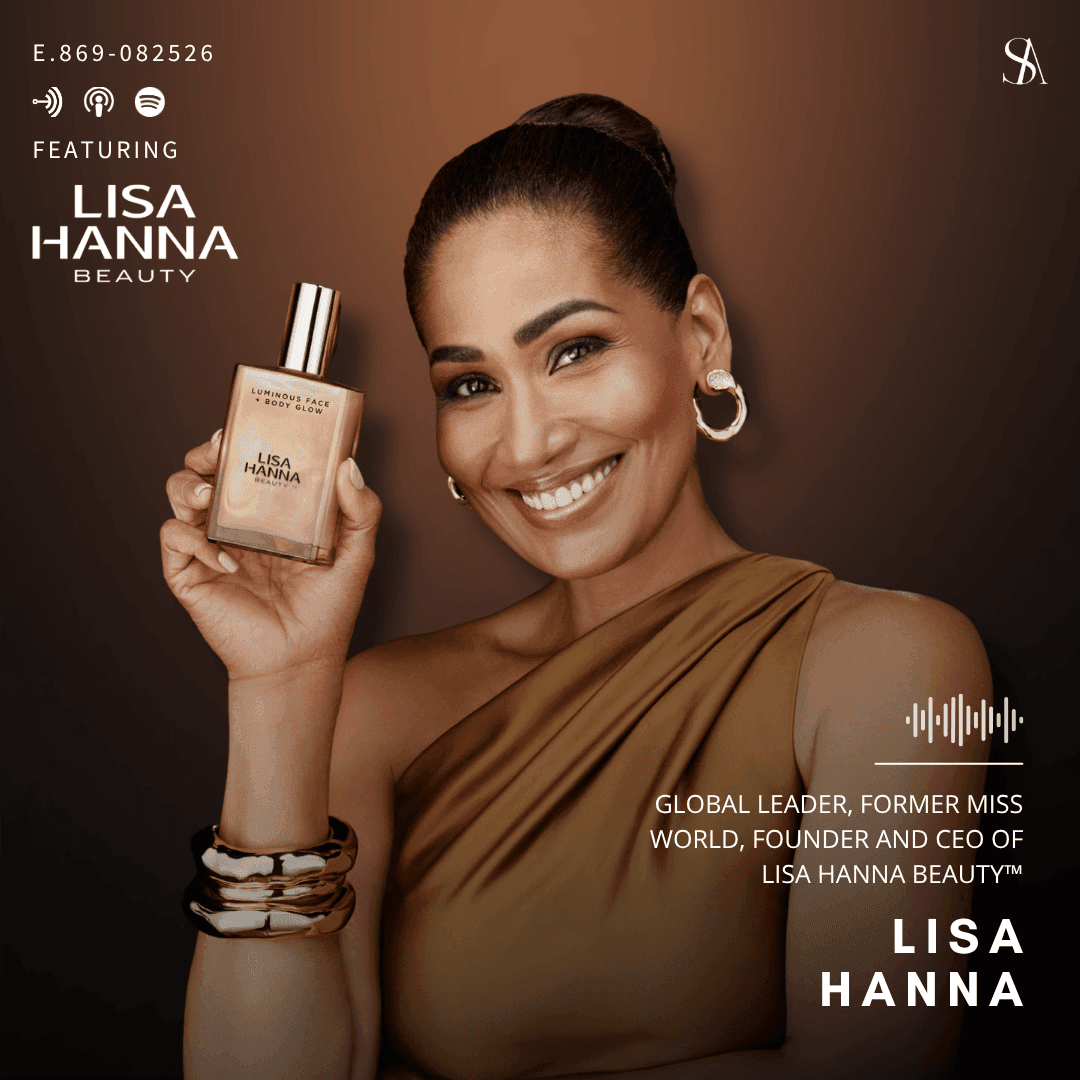
    From Miss World to Parliament: Beauty, Power, and Reinvention with Lisa Hanna - E. 860

    Lisa Hanna, former Miss World, longtime Jamaican cabinet minister, and founder of Lisa Hanna Beauty, joins Skin Anarchy to talk about rejecting the language of correction, building a science led luxury line in Italy, and the activist mission behind her brand.

    Who is Lisa Hanna?

    An "accidental beauty queen" who won Miss World in 1993 at 18, then built a two decade political career as one of Jamaica's youngest female members of parliament and a cabinet minister before retiring last year to enter beauty. "I think leadership has an obligation to give other people an opportunity to present their ideas."

    Why did she move from politics into beauty?

    Because she rejected how the industry talks about age. As she aged in demanding field work, actives like retinol and vitamin C stopped suiting her skin. "If we're constantly told that the evidence of time is something to correct, eventually we see ourselves and believe that time has diminished us."

    What does aging intelligently mean?

    Working with skin rather than fighting it. Hanna reframes skin as an organ deserving support, not correction. "Remember your skin is at its best when it's supported... when you're working in harmony with it." She sees longevity as overused and prefers accumulating knowledge over reversing time.

    How are women in politics judged on their appearance?

    Constantly, and before they speak. Hanna recalls being heckled entering parliament, then facing formal motions over sleeveless outfits and a national debate over a swimsuit photo at 51. "There's an ageist component to the beauty," she says, noting the judgment arrived "way before you open your mouth."

    Why did she make her line in Italy?

    For innovation and EU standards. She wanted regulated formulas that push boundaries without breaking the skin barrier. "I wanted my products to be EU regulated and to pass EU standards," working with a lab using mastic resin to stimulate the skin's own collagen rather than forcing change from the top down.

    What is the science behind Lisa Hanna Beauty?

    A proprietary quantum RECP delivery system across every product. It pairs mastic resin, protected vitamin C that activates only on the skin, green grape extract for inflammation, and matrikine peptides. "Skin must recognize what it already knows," she says, which is why the formulas absorb rather than sit on top.

    Is Lisa Hanna Beauty only for certain skin tones?

    No, and she resisted pressure to position it that way. Advisors pushed her to build a brand for people of color; she refused. "I want to do skincare for all skin types." The formulas are clinically tested to work across skin tones, and she argues luxury was wrongly withheld from many women for too long.

    What is the fade bomb?

    The line's breakout hero product, a hydrating balm for hyperpigmentation that doubles as a healing product. Built after visiting bleaching factories worldwide, it avoids harsh correctives. "That fade bomb is amazing," used on scarring, bikini line, and underarms across every skin tone.

    Can luxury skincare be affordable?

    That was the point. Watching post COVID economic pressure on women, Hanna built a premium seven product line meant to feel special without breaking budgets. "Every woman deserves when they go home to feel luxury," with glass bottles worthy of a vanity and formulas that are clinically tested.

    What is the brand's activist mission?

    Five percent of everything funds support for women and children with neurodivergence, especially in Jamaica, where child mental health resources are scarce. Drawing on her own son's experience and her time as minister of youth, she calls it an activist beauty brand. "Skincare can transform skin, but it can also transform lives."

    Listen to the full episode with Lisa Hanna on Skin Anarchy, available wherever you get your podcasts.

    From HGTV to Beauty: The Art of Reinvention with Alison Victoria - E. 868

    Interior designer, HGTV host, and Volition Beauty collaborator Alison Victoria joins Skin Anarchy to talk about the free habits that actually keep her well, how your home shapes your health, how HGTV really gets made, building her Greek Goddess Glow Drops, and what it takes to break into television. Below are the biggest questions answered in this episode. Who is Alison Victoria? An interior designer turned television host and executive producer who knew her path at age 11. Design is the throughline of everything she builds. "Doing design makes me happy and being happy makes me healthy. And that's to me the most important thing." What does Alison Victoria do for self care? She anchors to the basics: a daily workout and long sleep. "I sleep nine, 10 hours a night... I do attribute so much of that to my sleep." She keeps a trainer purely for accountability, and champions the free habits over expensive trends. "Why not talk about the things that are free?" How does your home environment affect your wellness? Profoundly, in her view. She calls a happy home the foundation of a healthy life. "I feel safe here and I feel like hugged every time I come in the door." Waking up in a space you designed for yourself, she argues, sets the tone for the entire day. How should you decorate to feel good at home? With memories, not catalogs. She favors open shelving to display travels and family, and a mix of old and new over sterile perfection. "I don't like walking into a sterile home... it makes me kind of shut down and close up." Copying a showroom, she says, removes the story that makes a space feel alive. How is HGTV actually made? Slowly, and then compressed. Her show takes nearly 11 months to film and airs in about two and a half weeks. "The meat of it is sometimes lost," so she works as a producer to recreate authentic moments the cameras missed. Her early shows taught DIY steps; her rehab shows now inspire rather than instruct. What is Greek Goddess Glow Drops? Her hero product with Volition Beauty, a serum that treats and beautifies at once. She formulated it herself through 40 samples. "I truly had my hands in it from day one." Inspired by Greek summers, it uses peptides, squalane, and resveratrol, with a fresh fig scent and a nonsticky, glazed finish that suits sensitive skin. Is the beauty industry oversaturated? Yes, and she says so plainly even as a new founder. "I think the beauty world is oversaturated, which makes me feel like a hypocrite because here I am coming out with something." Her answer was restraint: one hero product instead of a sprawling line, a shift she expects the whole industry to make. What does it take to succeed in a demanding career? Relentless execution. "If I have an idea, I do everything in my power to execute. I don't let it just sit on paper." She describes failures that cost money and never once giving up, tracing the drive back to working at Subway at 14 to buy her own car. How do you avoid burnout while scaling? By building a team so the business does not depend on her alone. "You're only as good as the people that you work with." She admits to running near burnout and putting money into team building so that, as she puts it, if she checks out the wheels do not fall off. How do you break into television today? By going to them, not waiting. Her first show came from answering a cold email, then saying yes to unglamorous work and pitching herself as the first woman to host a Crashers show. "If you want something bad enough, you find a way." Casting agents scour social media now, so put yourself where they are looking. Listen to the full episode with Alison Victoria on Skin Anarchy, available wherever you get your podcasts.

    How AI Will Reshape Beauty, Science, and Leadership with Chaz Giles - E. 867

    Chaz Giles, founder of Alida Labs and former head of external innovation at Estee Lauder, returns to Skin Anarchy to cut through the AI hype: where it creates real value in beauty and wellness, why midsize brands are outpacing the giants, how to get your data ready, and what AI means for executives and their careers. Who is Chaz Giles? Two decades across Procter & Gamble, venture capital, and Estee Lauder, then founder of Rivia and now Alida Labs. "How do you turn technology into things that consumers love and are good for business?" Where does AI actually fit in beauty right now? Unevenly. "We had a custom GPT... that's why it didn't really help, because it wasn't the use case that was right." Real value lives in data, formulation, product development, and DTC analytics. Where should a brand start with AI? With its existing strengths. "Think of AI as a superpower... where do you want to create a superpower?" Point it at your competitive advantage, not everything at once. How can AI help a brand stand out in a saturated market? By formulating with claims in mind, mapping white space, and turning one concern like hyperpigmentation into multiple defensible mechanism claims. "It's getting more mileage out of the formulas and ingredients I have." What is the difference between LLMs and agentic AI? Levels of value. "My agentic flows, I now can set up effectively AI employees and AI teams," letting a four person startup operate like a team of 40. Why are midsize companies beating the giants at AI? "They are not [winning], because they cannot get out of their own way in terms of how to do that redesign." Nimble midcaps are leapfrogging larger rivals and halving time to market. How should companies get their data ready for AI? Out of silos first. "There never was an award for the world's sexiest data." Consolidating scattered data unlocks synthetic testing and digital twins. How much AI is too much? Never too much data, easily too much AI. "AI should be used in places that it's giving me more value than I can create with my org chart today." How is AI changing beauty investment? "AI is eating software," erasing old moats. Brand and distribution matter more again, and a new crop of AI native brands is coming. What does AI mean for executives? A hard mirror as the value of information trends toward zero. "It's about how to apply, how to integrate, how to lead the teams and the transformation." How do leaders stay indispensable in an AI future? By leaning into what machines cannot do. "You as a leader are still uniquely positioned to take that information and translate it into valuable action." Listen to Skin Anarchy wherever you get your podcasts. Visit Alida Labs Don’t forget to subscribe to Skin Anarchy on Apple Podcasts, Spotify, or your preferred platform. Reach out to us through email with any questions. Sign up for our newsletter! Shop all our episodes and products mentioned through our ShopMy Shelf!

    What It Means to Become the Face of Sephora with Marjan Tabibzada - E. 866

    Building Mielle: Purpose Before Profit with Monique Rodriguez - E. 865

    How Bioelectricity Shapes Skin Health with David Suzuki of Bio-Therapeutic

    The Science of Building Great Beauty Brands with Chris Hobson of Rare Beauty Brands - E. 862

    Before Barrier Repair Was a Trend with Catherine D'Aragon of First Aid Beauty - E. 861

    Cutting Through the Noise: Dr. Muneeb Shah Debunks Skincare's Biggest Trends - E. 860