Why a generation raised on ingredient labels is asking bigger questions about what ends up on the plate
A grocery trip once required remarkably few questions. Milk was milk. Bread was bread. Eggs came from chickens, vegetables came from farms, and most people spent little time thinking about the systems that existed beyond the supermarket shelves. Food occupied a practical place in everyday life. It was fuel, tradition, comfort, convenience, and routine. Few shoppers paused to investigate supply chains, scrutinize ingredient panels, or consider the ethical, environmental, and cultural implications hidden inside an ordinary shopping cart.
Where did all that simplicity go?
Today, food is no longer simply something people eat. It is something people research, debate, photograph, document, optimize, and use to communicate values. Consumers do not merely ask whether something tastes good. They ask whether it is organic, regenerative, locally sourced, plant based, gluten free, minimally processed, high protein, hormone free, seed oil free, or ethically produced. Entire online communities have formed around ingredients, sourcing, processing, and nutrition, turning what was once a private decision into a public conversation.
Nowhere is that more visible than on social media. The “what I eat in a day” video, once a niche format for fitness influencers, has become one of the most recognizable genres online, with creators narrating breakfast, lunch, and dinner as though each meal were a statement of principle. Viewers study the plates, question the portions, and debate the choices in the comments. Eating has become something people perform as much as something they do.
The modern grocery store contains more information than previous generations would have known what to do with, and people are reading all of it. In many ways, the ingredient label has become one of the most scrutinized documents in contemporary life.
That scrutiny does not stop at the kitchen. The same consumer who turns over a protein bar to read the back is now doing the same with a serum, a sunscreen, a shampoo, or a bottle of laundry detergent. The clean beauty movement, the rise of ingredient decoding apps, and a growing appetite for brands that publish full formulas all reflect the same instinct. Industries that once operated with little public scrutiny are being asked to explain themselves, and food is where many people first learned to ask.
The modern consumer has become an investigator, and the kitchen is where the investigation usually begins.
For many people, the journey starts with necessity. A food allergy. A dietary restriction. A medical diagnosis. An ingredient that suddenly has to be avoided. What starts as a practical concern often turns into something much larger, because once people begin reading labels, they begin asking questions. Where did this food come from? Why are these ingredients here? How is this product made? What exactly am I putting into my body every day? Those questions rarely stay confined to a single ingredient.
What begins as an effort to avoid one thing often becomes an examination of everything else.
The closer consumers look, the more complicated the food landscape appears. Grocery aisles stretch for rows, filled with products containing ingredients many people struggle to pronounce, foods engineered for convenience, and meals designed to survive transportation, storage, and months of shelf life. According to the Centers for Disease Control and Prevention, ultra processed foods made up 53 percent of the calories American adults consumed between 2021 and 2023, and nearly 62 percent for children and teens (CDC, 2025). At the same time, social media, podcasts, investigative journalism, and documentaries such as Seaspiracy and Dominion have created unprecedented access to information about agriculture, food manufacturing, animal welfare, sustainability, and food waste.
The result is a generation, millennials and Gen Z in particular, that appears far less willing to consume blindly.
That shift helps explain why movements that once lived at the margins of food culture are now mainstream. Veganism, vegetarianism, regenerative agriculture, organic farming, ultra processed food awareness, local food systems, and environmental sustainability are often discussed as separate subjects, but they share the same underlying impulse: people want to know more about what they are eating.
More importantly, they want to know what their food choices say about them. For many, food is no longer functioning purely as nutrition. It has become an extension of identity.
Throughout history, people have expressed values through clothing, religion, politics, music, and lifestyle. Food has now joined that list. Eating has become one of the most visible ways people communicate beliefs about health, ethics, environmental responsibility, animal welfare, and personal wellbeing.
A plant based eater may be expressing concerns about animal agriculture. Someone who buys exclusively local produce may be supporting regional food systems. Someone who prioritizes organic products may be responding to concerns about pesticides and environmental health. Others find their identity in the protein revolution that has put protein into coffee, cereal, popcorn, and pasta, and turned cottage cheese into an unlikely viral star. Still others have made avoiding ultra processed food a guiding philosophy.
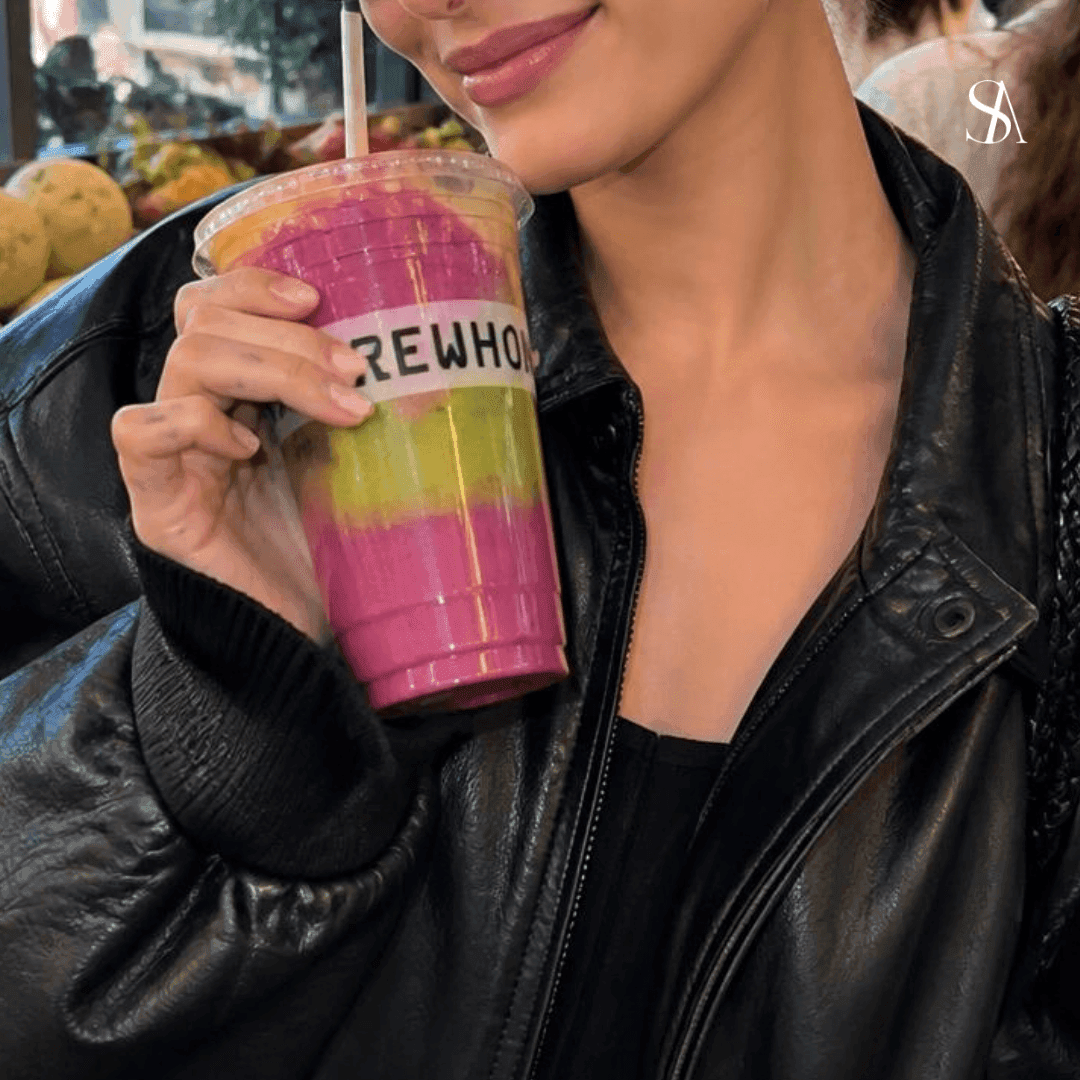
Food as status has followed close behind. In Los Angeles, a single smoothie at Erewhon can cost close to $20, and the store’s celebrity collaborations, most famously Hailey Bieber’s Strawberry Glaze Skin Smoothie, turned a grocery purchase into a cultural artifact. The cup itself became the point. Carrying it signaled something about who you were, what you valued, and what you could afford.
In each case, the food becomes part of a larger story.
Veganism offers one of the clearest examples. It is often discussed as a dietary choice, but for many people it functions as an ethical framework through which questions about animal welfare, environmental stewardship, and personal responsibility become interconnected. Its appeal extends beyond removing animal products from a plate. It reflects a desire to understand how food reaches consumers and what consequences exist along the way.
Environmental concerns add another layer. Food waste, land use, water use, and emissions are now regular topics in conversations about diet. Questions that once seemed reserved for policy experts appear in everyday life, and consumers who never considered the environmental footprint of dinner a decade ago now encounter those discussions daily online.
Health concerns have expanded the conversation further still. Interest in minimally processed foods and skepticism toward highly processed products reflect broader worries about chronic disease, inflammation, and long term wellness, and some of those worries have meaningful research behind them. A 2024 umbrella review in The BMJ associated higher ultra processed food consumption with 32 adverse health outcomes, with the most convincing evidence for cardiovascular death and type 2 diabetes, though the strength of evidence varied considerably across outcomes (Lane et al., 2024).
Not every concern holds up equally well, however. The seed oil panic that has spread across social media is a useful example. Claims that canola, sunflower, and soybean oils are uniquely toxic have gained enormous traction online, yet major health organizations, including the American Heart Association, have long held that replacing saturated fats with polyunsaturated fats like those found in these oils is associated with lower cardiovascular risk. The raw milk debate follows a similar pattern, with enthusiasm online running well ahead of the evidence and well ahead of what food safety experts consider prudent. Reading the label is only the first step. Interpreting it correctly is harder.
What gives this moment its cultural weight is not that more people are becoming vegan, vegetarian, gluten free, organic, or regenerative. It is that they are asking questions about ingredients, sourcing, responsibility, values, and transparency.
For decades, consumers largely trusted institutions to decide what belonged in food. Today’s consumers often place greater trust in their own research, their own communities, and their own ability to investigate. That independence carries real risks, as the spread of misinformation makes clear. But it also reflects something difficult to dismiss: fewer people are willing to remain passive participants in the systems that shape their daily lives.
The future of food may depend less on whether consumers choose animal products, plant based alternatives, or any particular dietary philosophy, and more on whether they continue demanding visibility into systems that once operated with little public attention, and whether they hold what they find to the same standard of scrutiny they apply to the label.
Once people start reading the label, it becomes very difficult to stop asking questions.