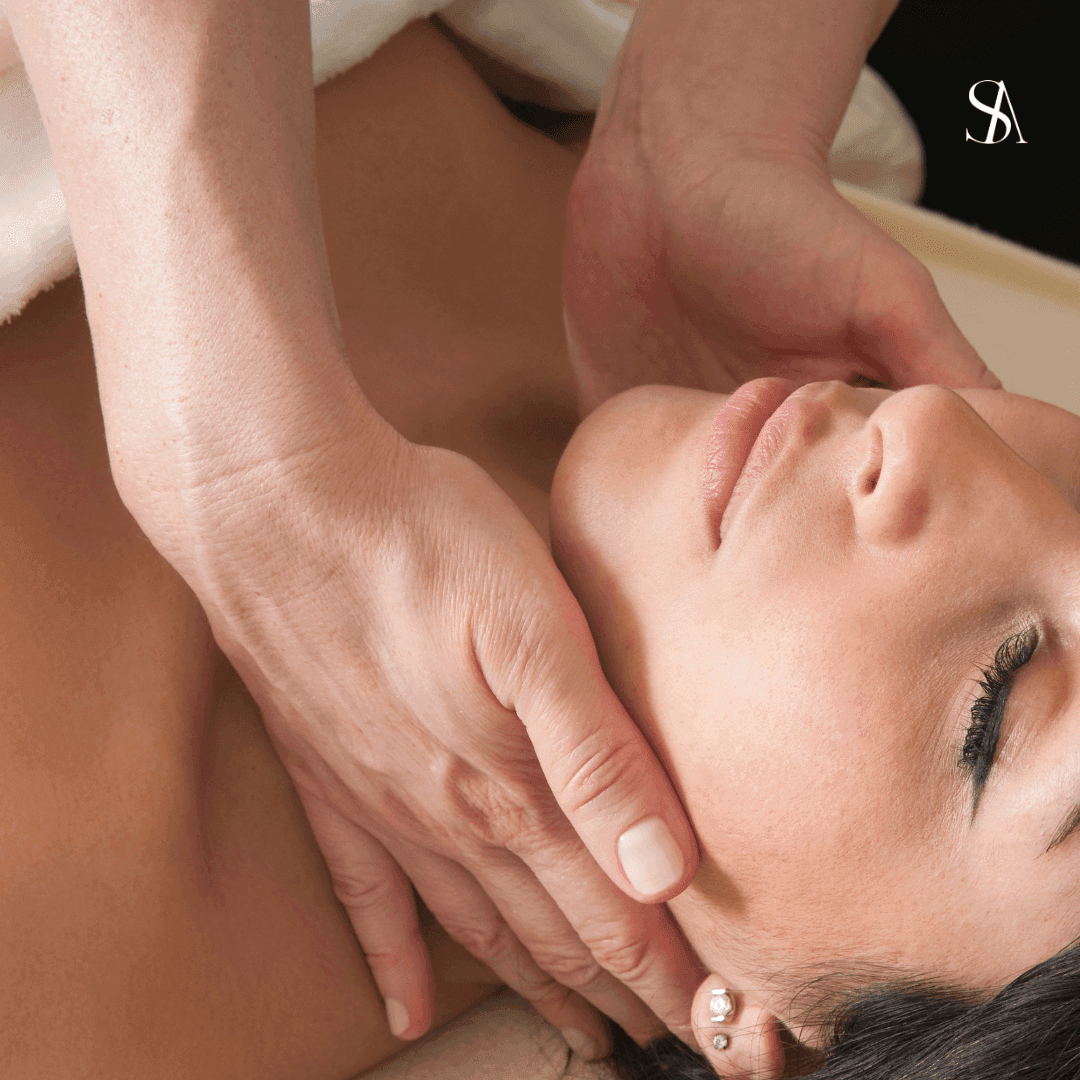
The effect is subtle enough to escape measurement yet visible enough to command attention. Following a facial treatment, the face can appear less puffy, the jawline more apparent, and the overall complexion more rested. For much of beauty history, those changes would have been discussed in aesthetic terms alone. Today, they are increasingly explained through anatomy. The language of refreshment has gradually been replaced by the language of lymphatic drainage.
The term now appears everywhere, especially by wellness and beauty creators. It surfaces in conversations about red-carpet preparation, post-surgical recovery, wellness routines, facial sculpting, and morning depuffing rituals. Entire social media accounts are devoted to teaching drainage techniques, while gua sha tools, facial massage devices, compression treatments, and body therapies are increasingly marketed through their supposed effects on the lymphatic system. What was once a niche therapeutic practice has become one of the most recognizable concepts in modern beauty. At one point, videos demonstrating lymphatic drainage techniques accumulated millions of views. Facialists posted sped-up treatment footage. Consumers filmed themselves holding gua sha tools against their cheeks before work. Influencers compared one side of the face against the other. A treatment that had previously occupied a relatively narrow medical context suddenly became part of everyday beauty language.
The more interesting question may no longer be why lymphatic drainage became popular, but how a specialized therapeutic technique evolved into one of beauty’s most recognizable trends, and what happened as social media transformed that technique into content.
The System Nobody Was Talking About
What made lymphatic drainage such an unusual beauty trend was that the vast majority of people had never heard of the system it was built around until it suddenly became impossible to avoid.
Unlike the heart, which most people understand as the engine of circulation, the lymphatic system operates almost entirely in the background. It is a network of vessels, nodes, tissues, and organs responsible for maintaining fluid balance, supporting immune function, and transporting waste products away from tissues. Every day, excess fluid that accumulates around cells is collected by lymphatic vessels and eventually returned to circulation after passing through lymph nodes, which function as part of the body’s immune surveillance network (Hyland, 2026; ScienceInsights, 2026).
The detail that perhaps explains the entire trend is also the one most consumers never learn. Unlike the cardiovascular system, the lymphatic system does not have a central pump. Fluid movement depends on ordinary things such as walking, breathing, shifting posture, and muscle contraction, a physiological reality that makes the system feel simultaneously scientific and strangely accessible. That reality helps explain why exercise, walking, stretching, and even diaphragmatic breathing are frequently cited by clinicians as some of the most effective ways to support normal lymphatic function (Halim, 2026; Hyland, 2026).
Another point frequently lost in social media demonstrations is that professional manual lymphatic drainage is remarkably gentle. Unlike deep tissue massage or aggressive facial sculpting techniques, authentic lymphatic drainage uses light, rhythmic pressure designed to stretch the skin rather than compress underlying tissues. The superficial lymphatic capillaries responsible for collecting fluid sit just beneath the skin’s surface, which means excessive pressure can actually work against the intended physiological effect. This distinction becomes important in a digital environment where many popular tutorials emphasize vigorous scraping, heavy pressure, or aggressive manipulation despite professional protocols recommending the opposite (Harris, 2026; Sweet and Sturm, 2026).
It also helps explain why the system became so appealing to beauty culture. If fluid accumulation can influence swelling, and swelling can influence appearance, then consumers naturally begin wondering whether changing one might change the other.
For practitioners working with lymphedema, the popularity of lymphatic drainage has created an unusual situation. A treatment they associate with swelling management and recovery is increasingly being discussed through the language of contour and facial sculpting. Kelly Sturm, a certified lymphedema therapist, notes that facial applications may help reduce puffiness and support post-procedural recovery, yet these uses exist within a much broader clinical context than many social media discussions acknowledge (Sweet and Sturm, 2026).
What many consumers interpret as sculpting may therefore be something considerably less mysterious. One of the most common questions surrounding lymphatic drainage is how long these visible changes actually last. The answer depends largely on the cause of the swelling being addressed. Reductions in temporary puffiness related to travel, sleep, sodium intake, or fluid retention may remain visible for several hours or even a day. Post-procedure swelling follows a different timeline and may require repeated treatments as part of a broader recovery protocol. In most aesthetic situations, however, the results should be understood as fluid management rather than permanent structural change. The treatment does not create new facial contours. It temporarily changes how existing contours are revealed.
One reason the lymphatic system became such an appealing beauty story is that consumers tend to encounter it through aesthetics rather than physiology. Yet researchers estimate that approximately three liters of fluid are returned to circulation through the lymphatic system every day. The scale is easy to overlook because lymphatic activity is invisible. A person may never think about the system at all until something disrupts it, yet it quietly manages fluid transport across thousands of miles of vessels throughout the body, a network that is actually more extensive than the blood vascular system itself (Hyland, 2026). Without that process, excess fluid would steadily accumulate within tissues, contributing to swelling and impairing normal physiological function (Hyland, 2026; ScienceInsights, 2026). Perhaps even more surprising is that the lymphatic system has become a growing area of neurological research. In recent years, scientists have identified lymphatic vessels within the membranes surrounding the brain, a discovery that challenged decades of assumptions about how the central nervous system interacts with immune function. While these findings have little to do with facial contouring, they underscore how much remains unknown about a system that beauty culture now discusses on a daily basis (Hyland, 2026).
The irony is that many of the most viral demonstrations bore little resemblance to how manual lymphatic drainage is actually practiced. Professional lymphatic drainage relies on remarkably light pressure because lymphatic capillaries sit just beneath the surface of the skin. Yet many of the most widely viewed videos emphasized the opposite. Faces became visibly red, scraping techniques grew more aggressive, and visible irritation increasingly functioned as proof that the treatment was working. The contradiction was difficult to miss because the outcomes generating the most engagement were often the outcomes practitioners were actively trying to avoid. When viewers could see something happening, visibility itself became evidence, regardless of whether the reaction reflected the intended technique (Harris, 2026; Sweet and Sturm, 2026). That distinction may sound subtle, but it is central to understanding why lymphatic drainage became such a powerful beauty narrative.
Beauty’s Shift From Symptoms to Systems
A generation ago, beauty products were generally marketed around what consumers could already see. Fine lines were softened. Dark spots were brightened. Dry skin was hydrated. The language of beauty was almost entirely visual because the industry largely concerned itself with visible outcomes.
Today, consumers are increasingly exposed to a different framework. The rise of lymphatic drainage emerged at precisely the moment beauty became fascinated with the body’s internal mechanisms. Unlike collagen, which became associated with aging, or the microbiome, which became associated with skin health, the lymphatic system carried a different appeal. Most consumers knew remarkably little about it. Most importantly, it provided a biological explanation for experiences consumers already recognized: puffiness after travel, swelling after procedures, fluid retention during periods of stress, and facial changes that seemed to fluctuate from day to day.
In many ways, lymphatic drainage benefited from the fact that most consumers knew very little about the system itself. The treatment arrived at a moment when beauty was becoming increasingly interested in biological explanations, yet few people possessed enough familiarity with lymphatic physiology to distinguish between established clinical applications and the claims that quickly emerged around them.
How a Clinical Technique Became a Luxury Treatment
Manual lymphatic drainage was originally developed in the 1930s by Danish physiotherapist Emil Vodder and remained largely within medical and therapeutic settings for decades. Long before celebrities discussed drainage massages and wellness clinics marketed sculpting treatments, clinicians were using specialized techniques to assist patients managing lymphatic dysfunction, postoperative swelling, and complications associated with cancer treatment (WellFR, 2025; ScienceInsights, 2026).
In those contexts, the purpose was relatively straightforward. The treatment was not intended to sharpen features, create a glow, or produce a temporary aesthetic transformation. It was used to address swelling, support recovery, and facilitate fluid movement when normal lymphatic processes had been disrupted.
What happened next was something altogether different.
As aesthetic medicine expanded and social media increasingly rewarded visible transformation, beauty began borrowing the language of medicine. Consumers became more interested in wellness-based explanations for appearance, while practitioners searched for therapies that felt both scientific and approachable. Lymphatic drainage offered something that modern beauty increasingly values: a visible result paired with an anatomical rationale. The timing of the lymphatic drainage boom also coincided with a dramatic increase in post-procedure aesthetics. As treatments such as injectables, facial contouring, body sculpting procedures, and liposuction became increasingly common, conversations about swelling and recovery became more mainstream. Consumers who previously would have encountered lymphatic drainage only in medical settings were suddenly hearing about it from plastic surgeons, influencers, facialists, and celebrities simultaneously (Harris, 2026; Hyland, 2026).
What many consumers observed was not the medical reasoning behind the treatment. Instead, they observed the outcome: a face looked more defined after treatment, post-surgical swelling appeared less pronounced, and features seemed more sculpted. Those observations ultimately proved far more influential than the physiology itself.
Over time, the treatment retained the language of medicine while increasingly functioning as a beauty ritual that anyone can accomplish with the right technique and tools. One reason lymphatic drainage spread so effectively online is that it succeeded in a category where many beauty treatments struggle: it produced changes consumers believed they could see immediately. Puffiness seemed reduced, facial contours looked more pronounced, and before-and-after photographs produced the kind of visual proof that performs exceptionally well online.
The treatment’s growth was accelerated further by the rise of gua sha and facial massage content, much of which was presented through the language of lymphatic drainage. As creators attempted to replicate professional techniques, the treatment gradually became simplified into something easier to film, easier to explain, and easier to reproduce at home.
The irony is that many of the most viral demonstrations bore little resemblance to how manual lymphatic drainage is actually practiced.
Professional lymphatic drainage relies on remarkably light pressure because lymphatic capillaries sit just beneath the surface of the skin. Yet much of the content circulating online began emphasizing intensity instead. Consumers frequently posted videos displaying bright redness, dramatic scraping techniques, and aggressive facial manipulation as evidence that a treatment was “working.” In some cases, the visible redness became part of the appeal, despite specialists repeatedly noting that significant redness is not a goal of authentic lymphatic drainage protocols (Harris, 2026; Sweet and Sturm, 2026). Nonetheless, the visual contradiction was difficult to miss because while professional practitioners repeatedly emphasized that manual lymphatic drainage relies on remarkably gentle pressure because superficial lymphatic vessels sit close to the skin’s surface, some of the most widely viewed content showed faces flushed red from repeated scraping and aggressive manipulation. And it was that kind of content that generated engagement partly because the redness appeared to function as evidence.
When viewers could see something happening, they believed it worked more or better, regardless of whether that visible reaction reflected the intended and/or correct technique or not.
What emerged was a familiar pattern in beauty culture. The visual representation of the practice gradually became more influential than the practice itself.
What Happens When Practices Travel
Part of the complexity surrounding lymphatic drainage is that it sits alongside a broader pattern in which practices originating outside mainstream Western beauty are translated, repackaged, and redistributed to new audiences.
Many consumers first encountered lymphatic drainage through gua sha, facial massage, or wellness rituals that carried cultural and therapeutic contexts extending well beyond aesthetics. As these practices gained popularity online, however, the focus increasingly shifted toward visible cosmetic outcomes. Concepts tied to circulation, recovery, balance, and overall well-being were often condensed into a far simpler proposition: a more sculpted face.
This is not unique to lymphatic drainage. At what point does adaptation become distortion? The question became particularly relevant as practices associated with recovery, circulation, and overall wellness were increasingly evaluated according to Western beauty standards. Techniques that originally existed within broader frameworks of care often became reduced to a single outcome: a more sculpted appearance.
Beauty culture has always translated practices as they move between industries and audiences; yet lymphatic drainage raises the issue particularly clearly because many consumers encountered the aesthetic version of the treatment before they encountered the therapeutic one, and its original purpose may have been partially replaced by the outcomes that perform best on camera.
As the practice moved between cultures, industries, and audiences, it inevitably changed. The more difficult question became whether those changes represented adaptation, simplification, or something closer to distortion.
The Before-and-After Economy
One reason lymphatic drainage spread so effectively online is that it offered something beauty culture consistently rewards: visible evidence. Unlike many treatments whose effects may take weeks or months to appreciate, lymphatic drainage appeared capable of producing changes that consumers believed they could see almost immediately.
Beauty increasingly operates within what might be described as a before-and-after economy. Treatments spread not simply because they produce results, but because those results can be photographed, compared, posted, shared, and discussed. Social platforms reward transformation, particularly when that transformation appears immediate.
Recent reporting has documented more than one million Instagram posts related to lymphatic drainage and hundreds of thousands of conversations across TikTok. Entire communities have emerged around depuffing protocols, drainage routines, gua sha techniques, recovery diaries, and body contouring practices. The challenge is that visibility and accuracy do not necessarily move together. The techniques most likely to generate attention are not always the techniques most likely to reflect how practitioners actually perform the treatment.
The treatment’s visibility may also explain why enthusiasm eventually became accompanied by skepticism. As more creators adopted lymphatic drainage content, audiences became increasingly exposed to exaggerated demonstrations and inflated claims. Videos showing intensely reddened skin, dramatic contour changes, and exaggerated “detoxification” narratives often accumulated attention more easily than nuanced explanations about swelling, fluid movement, or recovery. Over time, the conversation shifted from curiosity to scrutiny as consumers began questioning whether the treatment itself had changed or whether social media had simply changed how it was being presented.
Where Science Ends and Marketing Begins
Part of the reason lymphatic drainage remains difficult to discuss is that the strongest evidence supporting it has relatively little to do with beauty.
The benefits of manual lymphatic drainage for lymphedema management and certain types of swelling are well established. The evidence becomes considerably less definitive when discussions shift toward detoxification, weight loss, fat reduction, metabolic enhancement, and the broader collection of promises frequently attached to the treatment online (ScienceInsights, 2026; Halim, 2026).
This distinction has become increasingly important as the trend has grown. One of the reasons lymphatic drainage remains relevant even as public enthusiasm fluctuates is that science and social media were never discussing exactly the same thing. Clinicians were largely discussing swelling, fluid transport, and recovery; while beauty content increasingly focused on sculpting, transformation, and optimization. Those are related conversations, but they are not identical ones.
Physician Dr. Azza Halim has noted that one of the most common misconceptions surrounding lymphatic drainage involves the concept of detoxification itself. According to Halim, the lymphatic system functions primarily as a circulatory and immune-support system rather than as the body’s primary detox organ. Detoxification remains largely the responsibility of the liver and kidneys, despite the widespread tendency to attribute those functions directly to lymphatic drainage treatments (Halim, 2026).
Similarly, certified lymphedema specialists often emphasize that for individuals with healthy lymphatic systems, many of the activities most strongly associated with lymphatic wellness remain remarkably ordinary. Walking, breathing deeply, exercising regularly, and maintaining overall health often support lymphatic function more effectively than many consumers realize.
The growing popularity of at-home lymphatic drainage has also obscured an important reality: the treatment is not appropriate for everyone. Active infections, certain forms of heart disease, untreated malignancies, and specific vascular conditions are among the situations in which manual lymphatic drainage may be contraindicated. While most healthy individuals face little risk from gentle facial massage, specialists generally recommend that people with significant medical conditions seek professional guidance before pursuing intensive drainage therapies (Halim, 2026; Hyland, 2026).
That does not diminish the value of lymphatic drainage. It simply means that beauty and medicine are often discussing the same system through very different lenses.
Beyond Lymphatic Drainage
The conversation surrounding lymphatic drainage changed once consumers became familiar enough with the trend to begin questioning it. What started as fascination gradually evolved into scrutiny as audiences became more attentive to technique, more skeptical of exaggerated claims, and more willing to ask whether the versions of lymphatic drainage circulating online actually resembled the practice practitioners were performing in clinics. In that sense, lymphatic drainage followed a familiar beauty cycle. The treatment went viral, the narrative surrounding it became simplified, and the audience eventually became more informed than the content itself. What remains is a technique that continues to exist long after the peak of its popularity, which may be the clearest distinction between a trend and a practice. The rise of lymphatic drainage introduced millions of consumers to a physiological system they had never considered before.
The skepticism that followed introduced something equally important: a growing willingness to question the narratives attached to beauty trends, even when those narratives sound scientific. In many ways, the lymphatic drainage boom became a case study in what happens when a highly specialized therapeutic practice enters mainstream culture, accumulates millions of views, and gradually becomes detached from the expertise that originally defined it. The treatment itself survived that process. The question is whether the public understanding of it did.