

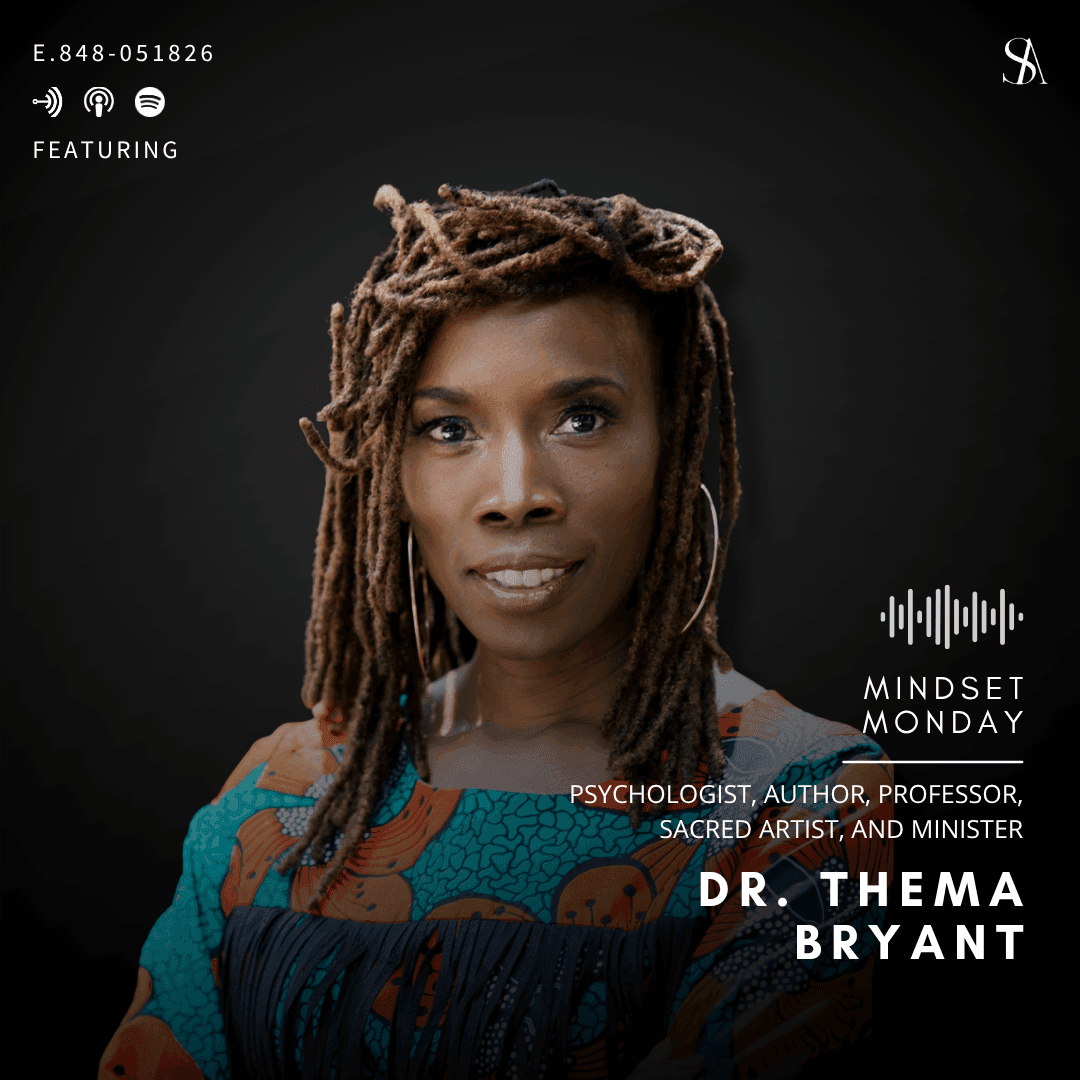
In this deeply reflective episode of Skin Anarchy, psychologist, author, professor, minister, and trauma expert Dr. Thema Bryant joins the conversation to unpack the emotional patterns that shape our relationships, our sense of self, and the ways we move through the world. Drawing from decades of clinical work, spiritual leadership, and cultural insight, Dr. Bryant explores what it truly means to heal — not just from trauma, but from the lifelong conditioning that teaches people to abandon themselves in order to survive.
From unhealthy relationships and emotional neglect to burnout, people-pleasing, racism, and the pressure to constantly perform, the conversation becomes a powerful examination of how identity, community, and emotional wellness intersect in modern life.
Growing Up Around Healing Conversations
Dr. Bryant shares that her path into psychology began in childhood. Raised primarily in Baltimore by a father who served as a pastor and a mother deeply rooted in education and care work, she grew up surrounded by people seeking guidance, comfort, and healing. Long before she formally entered the mental health profession, she found herself answering emotional crisis calls in her family home as community members reached out to her father for support.
As a child, she was often described as “sensitive,” something that was not always framed positively at the time. Yet over the years, that same sensitivity became one of her greatest strengths as a therapist. Her deep empathy and emotional attunement eventually evolved into the foundation of her professional work helping people process trauma, reclaim their voices, and build healthier relationships with themselves and others.
When Relationships Become Erasure
One of the most impactful themes throughout the episode centers around the difference between healthy effort in relationships and self-erasure.
Dr. Bryant explains that many people misunderstand the phrase “relationships take work.” In healthy dynamics, the work involves two people growing together toward a shared goal. In unhealthy dynamics, however, the “work” often becomes one person shrinking themselves to preserve the relationship.
She describes how many individuals learn to become “easygoing” or “low maintenance” not because they genuinely lack needs, but because they have been conditioned to suppress those needs in order to avoid rejection, abandonment, or disappointment. Over time, they begin to believe that receiving small fragments of love or validation is better than risking loneliness altogether.
This pattern becomes especially dangerous when emotional neglect, manipulation, or disrespect become normalized. Dr. Bryant emphasizes that many people fail to recognize emotional abuse because they compare their experiences only to extreme examples. Instead of asking whether a relationship is healthy, they ask whether it is “bad enough” to justify leaving.
Why Healing Changes Relationships
A major turning point in the conversation comes when Dr. Bryant discusses what happens after people begin healing.
According to her, personal growth often disrupts existing relationships because some relationships were built around passivity, silence, or control. When someone begins setting boundaries, expressing needs, or reclaiming confidence, the people around them do not always celebrate that evolution.
She explains that some individuals are not actually attached to who you are — they are attached to how easily you can be controlled. As a result, growth can trigger resistance, guilt, or accusations that you have “changed.”
Dr. Bryant reframes this entirely: growth is not betrayal. Healing may simply reveal that a relationship can no longer evolve alongside the new version of you.
Social Media, Performance, and the Fear of Authenticity
The episode also explores how modern digital culture intensifies people’s fear of authenticity.
Dr. Bryant reflects on the pressure many individuals feel to constantly shape themselves around public approval, especially online. Whether through curated content, personal branding, or social expectations, people increasingly begin measuring their worth through external validation rather than internal alignment.
She shares her own experience posting dance videos online — not as performance for approval, but as a genuine expression of joy. Her perspective is simple but powerful: people who dislike your authenticity are not necessarily your audience.
Rather than trying to become universally liked, Dr. Bryant encourages listeners to ask a more important question: Do I actually like who I become when I am trying to please everyone else?
Familiarity Is Not the Same as Compatibility
Another major discussion centers around why people stay in relationships, friendships, careers, or environments long after they have emotionally outgrown them.
Dr. Bryant explains that many individuals confuse familiarity with compatibility. Humans are naturally drawn toward what feels known, even when it no longer supports their growth. Fear of loneliness, uncertainty, or “starting over” can keep people trapped in unhealthy situations simply because they have invested years into them.
She introduces the psychological concept of “sunk cost,” where people continue investing in something solely because they have already invested so much time or energy into it. Whether in relationships, careers, or personal identities, many people remain stuck not because something is healthy, but because walking away feels emotionally expensive.
Burnout, Race, Gender, and the Pressure to Perform
One of the most powerful parts of the episode addresses how burnout disproportionately affects women and people of color.
Dr. Bryant discusses how many marginalized communities grow up internalizing the belief that survival depends on relentless labor and constant productivity. From immigrant households to communities historically shaped by systemic inequality, people are often conditioned to believe that rest is laziness and self-sacrifice is virtue.
She explains how this mentality becomes deeply embedded both culturally and psychologically.
Even hobbies become monetized. Rest feels undeserved. Boundaries feel selfish. People begin tying their worth to how useful they are to others.
For women in particular, this burden becomes even heavier due to the expectation of unpaid emotional labor and caregiving. The result is a generation of individuals who are exhausted, overextended, and disconnected from themselves — often while appearing highly successful on the outside.
Reclaiming Rest, Joy, and Selfhood
Throughout the episode, Dr. Bryant returns to one central message: healing is not about becoming someone new. It is about reclaiming the parts of yourself that were silenced, neglected, or abandoned along the way.
That reclamation may look like setting boundaries. It may look like changing careers, leaving unhealthy relationships, taking breaks, disappointing people, or allowing yourself to evolve beyond the expectations others placed upon you.
And perhaps most importantly, it means understanding that rest, joy, softness, and authenticity are not weaknesses. They are necessary parts of being fully human.
To learn more about Dr. Thema Bryant, visit her website and social media.
Don’t forget to subscribe to Skin Anarchy on Apple Podcasts, Spotify, or your preferred platform. Reach out to us through email with any questions.
FOLLOW OUR SOCIALS:
Apple Podcast: https://podcasts.apple.com/us/podcast/skincare-anarchy/id1522162686
Spotify Podcast: https://open.spotify.com/show/298oIu74qjd3pXaaBMDr19
Instagram: https://www.instagram.com/skincareanarchy/?hl=en
Facebook: https://www.facebook.com/skincareanarchhy/
Twitter: https://twitter.com/SkincareAnarchy
Reddit: https://www.reddit.com/r/Skincare_Anarchy/
LinkedIn: https://www.linkedin.com/company/skincareanarchy/
Pinterest: https://cz.pinterest.com/skincareanarchy/_created/
TikTok: https://www.tiktok.com/@skincareanarchy
Medium Blog: https://skincareanarchy.medium.com
Shop through our ShopMy Shelf!