

A Different Starting Point
In this special retail launch episode of Skin Anarchy, the conversation begins with a premise that feels almost overdue: the future of beauty will not be defined by products alone, but by the systems, values, and cultural narratives behind them.
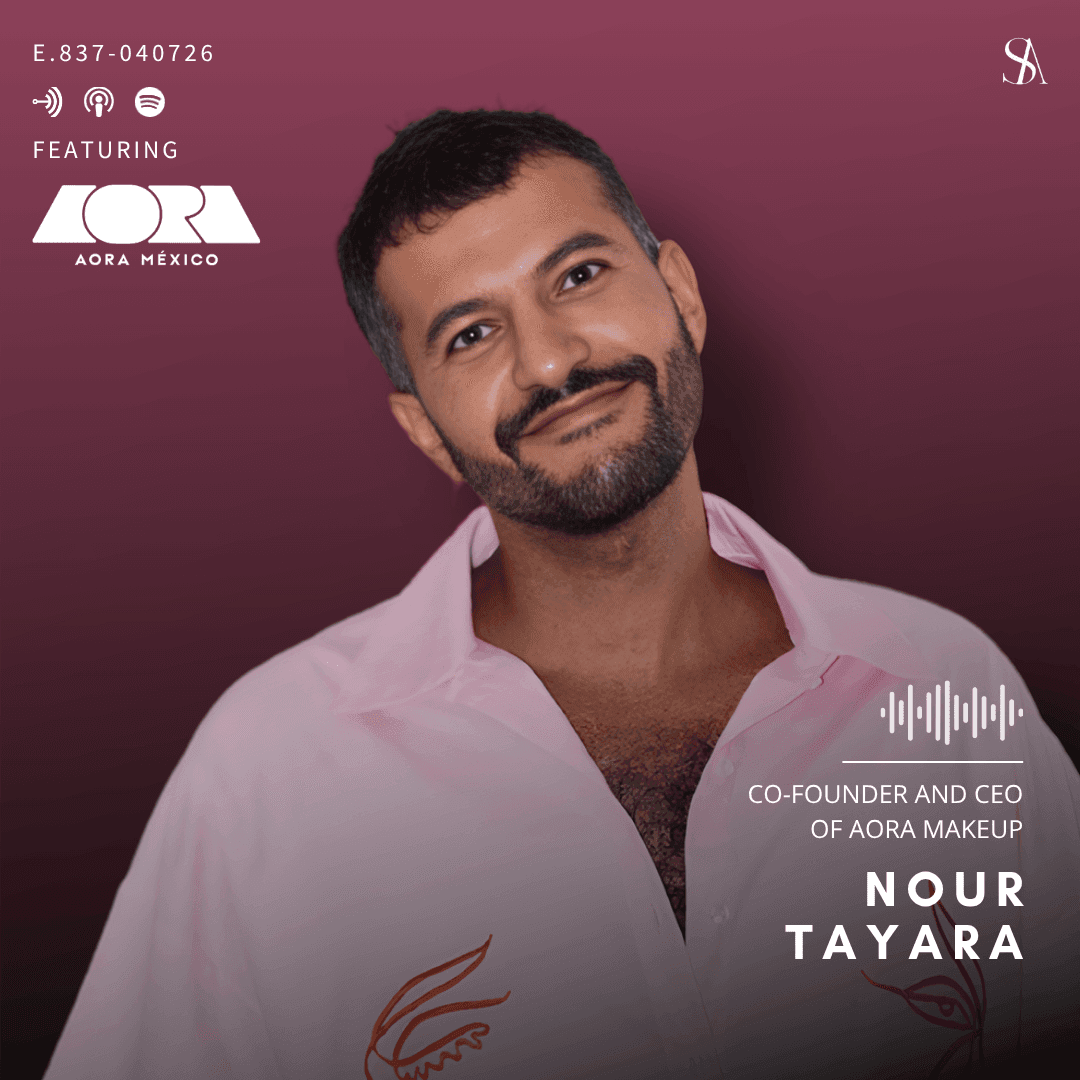
Joined by Nour Tayara, co-founder and CEO of AORA Makeup, the episode explores what happens when sustainability is no longer treated as a constraint—but as a creative opportunity.
Tayara’s path into beauty was anything but conventional. Trained as an engineer, he entered the industry through marketing before spending over a decade at L'Oréal, where he worked across innovation and product development. It was there, at the scale of one of the world’s largest beauty companies, that he began to understand both the power and the limitations of the system.
The System Beneath the Product
What becomes clear early in the conversation is that beauty’s sustainability problem is not rooted in a lack of ideas—it’s rooted in infrastructure.
Inside large organizations, innovation often exists, but implementation is constrained by scale. A single packaging change can disrupt global supply chains. A slight shift in product appearance can impact billions in revenue if consumers no longer recognize it on the shelf. These are not small decisions—they are systemic ones.
At the same time, the industry has long operated under a set of assumptions that are now being challenged. That sustainability is expensive. That it must look minimal or clinical. That it cannot coexist with desirability.
Tayara reframes all three.
The Moment That Changed Everything
Before founding AORA Makeup, Tayara was tasked with building a clean and sustainable makeup brand within L'Oréal. The project progressed, but ultimately stalled—caught between ambition and the realities of operating within a legacy system.
That moment became a turning point.
What followed was not just the decision to start a new brand, but to rethink the foundational assumptions of what a beauty brand could be. AORA Makeup was born not simply as a product line, but as a response to a deeper frustration: that the industry had separated sustainability from creativity, when in reality, the two should be inseparable.
Beyond the “Clean Beauty” Aesthetic
One of the most compelling parts of the conversation is Tayara’s critique of what clean beauty has become.
Over time, “clean” has evolved into a visual language as much as a formulation philosophy—one dominated by neutral tones, minimalist packaging, and a kind of quiet restraint. While this aesthetic has its place, it has also narrowed the perception of what responsible beauty can look like.
AORA Makeup challenges that entirely.
Instead of stripping beauty down, the brand builds it back up—through color, cultural references, and storytelling. Packaging draws from Mexican heritage, from the tones of currency to historical design moments, creating products that are not only functional but expressive.
In doing so, Tayara introduces a different idea: that sustainability does not need to be subdued. It can be bold. It can be vibrant. It can be emotional.
Culture as a Missing Layer in Innovation
What emerges throughout the episode is a broader commentary on how beauty has historically been framed. For decades, dominant narratives have come from the same regions, the same references, the same visual codes.
AORA Makeup intentionally disrupts that pattern.
By grounding the brand in cultural specificity—while still making it globally accessible—it reintroduces something that has been quietly missing: curiosity. Not just about ingredients or efficacy, but about the stories behind what we use and why we’re drawn to it.
This shift is subtle but significant. It moves beauty away from imitation and toward interpretation.
Why This Moment Feels Different
There is also a larger context shaping this conversation. Tayara points to a cyclical pattern in culture: moments of global uncertainty are often followed by waves of maximalism, expression, and creativity. Beauty becomes an outlet, not just a routine.
In that sense, the return of color, texture, and bold design is not случай—it’s a response.
And it signals something important. Consumers are no longer just looking for products that work. They are looking for products that mean something, that reflect identity, that offer a sense of connection in an otherwise fragmented world.
Redefining What Innovation Looks Like
By the end of the episode, innovation takes on a different definition.
It is no longer just about new ingredients or technologies. It is about rethinking how products are designed, how brands are built, and how consumers engage with both. It is about aligning performance with responsibility, without sacrificing experience.
And perhaps most importantly, it is about recognizing that beauty has always been optional. Consumers don’t need these products—they choose them.
That choice raises the bar.
Listen to the full episode of Skin Anarchy to hear how Nour Tayara and AORA Makeup are challenging the conventions of sustainability, redefining brand identity, and shaping a more expressive future for beauty.