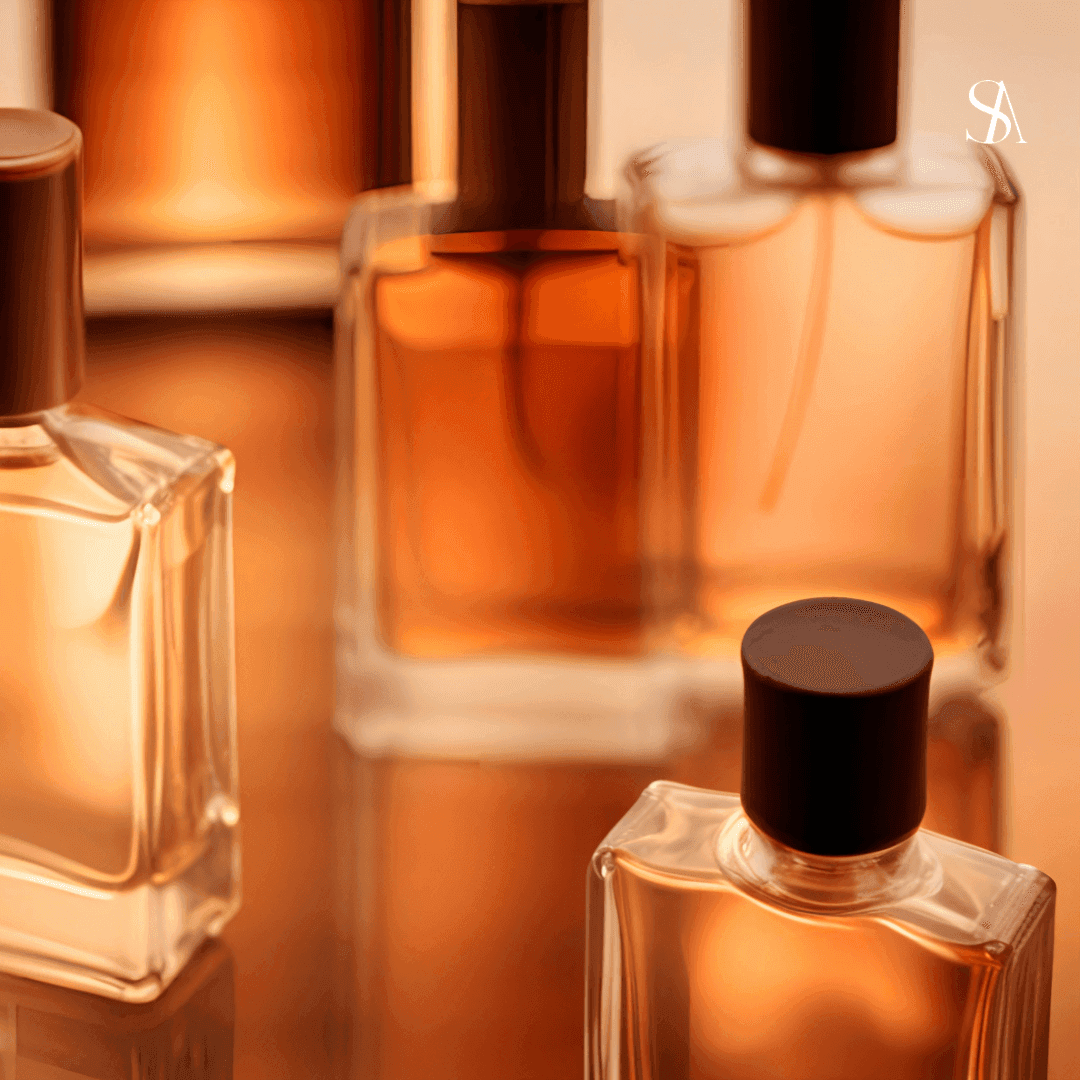
Every fragrance era leaves behind a fantasy. For a long time, perfume followed the same logic as fashion, beauty, and even celebrity culture. People did not simply wear fragrance. They wore the possibility of becoming someone else. The woman in a campaign was never buying groceries, answering emails, or running late for work. She was stepping into the back of a car in Paris as rain reflected the city lights against the pavement. She was checking into a hotel with no obvious destination and no apparent responsibilities waiting for her at home. She was arriving somewhere glamorous, expensive, and slightly unattainable. Fragrance functioned as an accessory to that fantasy, promising confidence, mystery, seduction, and transformation in a single bottle.
Fall was the season that embraced the fantasy most enthusiastically.
As temperatures dropped, perfume became darker, richer, and more dramatic. Notes like patchouli, tobacco, amber, leather, and smoky vanilla dominated seasonal recommendations, creating scents designed to linger long after the person wearing them had left the room. Fall fragrance was rarely subtle because subtlety was never really the point. The goal was presence. The goal was impact. The goal was being remembered.
There was something comforting about the predictability of it. Autumn arrived, and with it came the annual parade of seductive fragrances promising to make their wearer more magnetic, more mysterious, and somehow more interesting than they had been the season before.
Yet spend ten minutes inside a fragrance store today and the conversation feels remarkably different. The shift becomes obvious the moment someone is asked what they are looking for. Very few people answer by describing how they want to be perceived. Instead, they describe how they want to feel.
Increasingly, people walk into fragrance stores carrying requests that would have sounded almost absurd a decade ago. They are not asking for a perfume that projects across a room or guarantees compliments from strangers. They are asking for something that smells like the first genuinely cold morning after a long summer, like rain darkening the sidewalks outside a neighborhood bookstore, like a wool sweater pulled out of storage after months of heat, or like the fantasy novel they disappear into before bed when the real world begins demanding too much. They want something comforting. They want something familiar. They want a fragrance that feels less like an accessory and more like a place they can return to, one that truly understands and represents who they are.
Anyone who has wandered through Bath & Body Works during the first weeks of fall has witnessed some version of this transformation in real time. Customers are not shopping exclusively for notes. They are shopping for moods. They are searching for the scent of October. They are searching for nostalgia. They are searching for the feeling of walking through leaves that have just begun to turn, for the atmosphere of a favorite café on a rainy afternoon, for the comfort of returning home at the end of a long day and immediately recognizing the smell of a familiar space.
Fragrance has become increasingly emotional.
Anyone who has caught a familiar scent on a stranger and instantly traveled backward in time understands why. Scent has always possessed a unique relationship with memory, but something about the current cultural moment has pushed that relationship to the forefront. The language surrounding perfume sounds different now. Less like aspiration. Less like transformation. Less like performance.
More like storytelling.
A fragrance smells like an old library with creaking wooden floors and shelves worn smooth from generations of readers.
A fragrance smells like the pages of a fantasy novel opened beside a window while it rains outside.
A fragrance smells like steamed milk, cardamom, and conversation lingering long after dessert has been served.
A fragrance smells like a grandmother’s kitchen during the holidays.
A fragrance smells like the first week of October.
A fragrance smells like the version of yourself that existed before life became so complicated.
Those descriptions may sound oddly specific, yet they reveal something significant about the direction fragrance has taken. People are no longer purchasing perfume solely as an accessory.
That change helps explain why some of the notes gaining momentum heading into Fall 2026 would have seemed almost implausible a decade ago. And no note captures that shift more completely than tea.
If there is a fragrance note poised to become the defining signature of Fall 2026, it is black tea.
Not because it makes its presence noted, and certainly not because it follows the traditional rules of luxury, but because few scents evoke the quiet rituals people seem increasingly drawn toward. A black tea fragrance smells like a moment carved out of a crowded day. It smells like condensation gathering on a window while the weather finally begins to turn. It smells like slowing down long enough to notice your surroundings. In a culture that celebrates speed, tea fragrances feel almost rebellious in their insistence on stillness.
Fragrances such as Le Labo Thé Noir 29, Vilhelm Dear Polly, and BDK Gris Charnel helped establish tea as one of modern perfumery’s most compelling categories, and the momentum continues building. Spend enough time in fragrance communities on TikTok, Reddit, Fragrantica, or beauty forums and the pattern becomes impossible to miss. People are searching for fragrances that feel thoughtful, grounded, and lived-in.
Tea fragrances deliver exactly that. Tea suggests ritual. Tea suggests routine. Tea suggests the luxury of time itself, and the power to make it stop.
The same could be said for another category quietly taking over fragrance conversations: rice.
A decade ago, predicting that steamed rice would become one of fragrance’s most desirable notes would have sounded absurd. Luxury fragrance traditionally relied upon ideas of rarity, distance, and extravagance. Oud. Ambergris. Precious woods. Exotic florals.
Rice represents something entirely different.
The appeal of fragrances such as Diptyque L’Eau Papier, d’Annam White Rice, and BTSO Dirty Rice comes from their familiarity. They smell like steamed grains rising from a bowl, skin warmed by a cashmere sweater, freshly laundered fabric folded while still warm, and the quiet comfort of ordinary moments. They feel less interested in impressing strangers than in creating a sense of belonging.
They reject spectacle, and consumers seem to love them for exactly that reason.
Cardamom tells a similar story. Warm without becoming heavy, spicy without becoming overwhelming, and comforting without becoming predictable, cardamom offers many of the qualities people traditionally associated with autumn while sidestepping the intensity that once defined seasonal fragrance. Its popularity speaks to a larger desire for warmth that feels inviting rather than dramatic.
Even vanilla, perhaps the dominant fragrance note of the last decade, appears to be evolving.
After years shaped by dessert-like gourmands and sugary excess, consumers are gravitating toward vanillas that feel drier, softer, and more textured. The references have changed. Less bakery. More cashmere. Less frosting. More skin. Less sugar rush. More warmth.
What emerges from all of these trends is a very different idea of luxury. The fragrance equivalent of velvet ropes, impossibly expensive hotels, and reservations nobody else could get.
The fragrances attracting attention now often feel extraordinarily ordinary in the best possible way. They smell like tea stains on a wooden table. They smell like paperbacks. They smell like candles burning quietly in another room. They smell like cashmere draped over the back of a chair. They smell like staying in rather than going out.
Together, these trends point toward something larger than fragrance. The fantasy did not disappear but it did change, following comfort.
The aspirational figure of Fall 2026 is no longer the mysterious stranger wrapped in amber and cigarette smoke at the end of a dimly lit bar. The aspirational figure is reading in a café while rain taps against the windows. They are carrying a worn paperback on a train while the landscape drifts past unnoticed. They are hosting friends for dinner. They are walking through a city in an oversized coat while the air finally begins to cool. They are making tea before opening a new novel. They are lighting a candle and choosing to stay home.
The fantasy feels smaller but it also feels more attainable. And what makes the current moment so fascinating is that these fragrances are arriving at a time when much of culture appears to be reevaluating its relationship with aspiration. The last decade rewarded visibility. The most successful people seemed to be the loudest, the most polished, the most publicly desirable, and the most relentlessly productive. Beauty reflected that mood. Fashion reflected that mood. Fragrance reflected that mood.
For years, fragrance trends could be identified through a single dominant note. Oud defined an era. Gourmand vanilla defined another. The scent profile emerging ahead of Fall 2026 feels harder to summarize because it is built less around ingredients than around a state of mind.
If this season has a defining fragrance, it smells like black tea cooling beside an open novel, cardamom lingering on a wool sleeve, pages turning in a quiet bookstore, soft woods warming against skin, and vanilla woven through cashmere rather than dessert.
It is a fragrance profile rooted in ritual, familiarity, and comfort rather than seduction.
The industry will undoubtedly describe it through different notes and different bottles, but the emotional destination remains remarkably consistent: people want fragrances that feel like places they already love.
In years past, perfume promised transformation. The defining scent of Fall 2026 promises recognition. It smells less like becoming someone else and more like coming home.