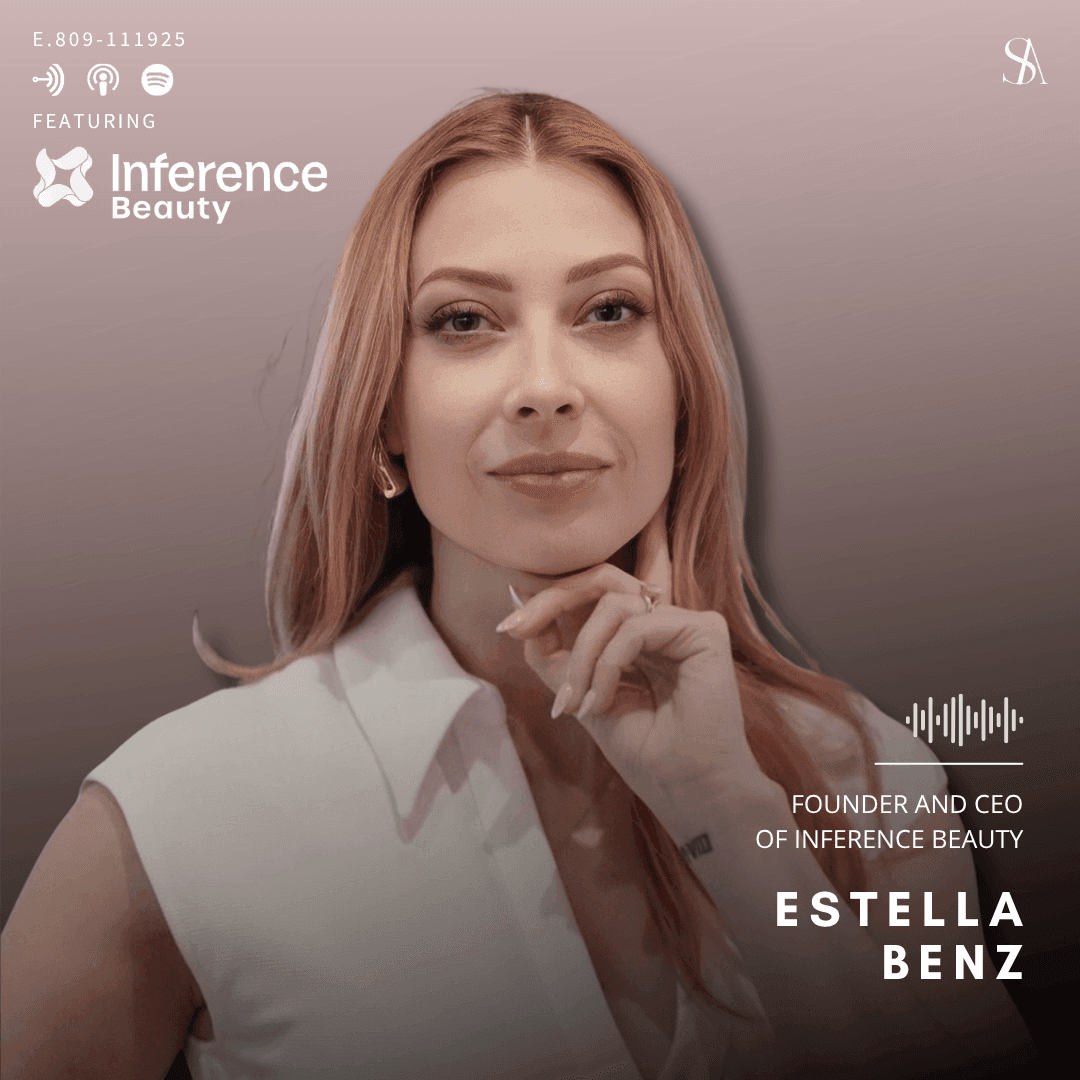
In this fascinating episode of Skin Anarchy, Dr. Ekta Yadav sits down with Estella Benz, the founder and CEO of Inference Beauty, to explore the next frontier of the skincare industry: data intelligence and digital personalization.
The Idea That Started It All
Estella’s journey began while studying at the Fashion Institute of Technology in New York. Surrounded by peers who shared her passion for beauty but struggled to find products that truly fit their needs, she noticed a common thread: consumers didn’t have time—or tools—to decode ingredients, ethics, and efficacy.
“Ten years ago,” she recalls, “people were already asking for more transparency—vegan, allergy-safe, or sustainable formulas—but it was nearly impossible to find what worked without hours of research.”
What began as a consumer frustration evolved into a sophisticated technological solution. After developing an algorithm for her own e-commerce store, Estella was approached by a retailer who wanted to license her technology. That moment led to the birth of Inference Beauty—a B2B platform that uses structured data and AI to match consumers with the right products based on ingredients, ethics, and environment.
The Power of Ingredient Transparency
At its core, Inference Beauty bridges the communication gap between brands and buyers. The platform decodes complex INCI labels, translating obscure chemical names into consumer-friendly language (“Butyrospermum Parkii” becomes shea butter). It contextualizes each ingredient—explaining not just what it is, but why it’s there: whether it hydrates, emulsifies, stabilizes, or simply enhances texture.
This level of transparency, Estella explains, is essential to rebuild consumer trust in an age of fear-driven “clean beauty” narratives. “A lot of the third-party apps flag ingredients as dangerous without explaining concentration or purpose,” she says. “We want to give consumers truth, not fear.”
Beyond Clean: Building Smarter, Data-Driven Beauty
The Inference Beauty database doesn’t stop at ingredients—it integrates ethical certifications, environmental factors, and biological data. Pollution, humidity, and UV exposure are all analyzed alongside personal factors like allergies, sensitivities, and hormonal changes (for instance, menopausal or postpartum skin).
This multidimensional data model allows for personalized, explainable recommendations—not one-size-fits-all marketing.
As Estella notes, “Beauty needs to evolve from ‘for everyone’ to ‘for each.’”
Rethinking E-Commerce and Education
Today, over 80 percent of beauty sales occur online, yet most e-commerce sites still present generic product pages. Inference Beauty enables brands to move beyond static descriptions toward dynamic personalization—where the website adapts in real time to the shopper’s needs.
Rather than reading “this moisturizer is great for dry skin,” a consumer might see: “This moisturizer works for you because your skin barrier is compromised, you live in a low-humidity environment, and you prefer vegan ingredients.”
The goal is not to sell more—it’s to sell smarter, with clarity, context, and confidence.
AI and the Human Element
Despite her deep faith in AI, Estella emphasizes that technology should augment, not erase human expertise. For highly active or near-medical-grade products, professional oversight remains critical. “You can’t diagnose through a screen,” she says. “Some things still need to be seen, touched, and discussed.”
Inference Beauty’s hybrid model—merging data analytics with human guidance—embodies that balance. It’s a reminder that the future of skincare won’t be driven by algorithms alone, but by a shared mission to help consumers understand what truly works for their biology.
Listen to the full episode of Skin Anarchy to hear how Estella Benz is redefining ingredient transparency, digital trust, and the very way we shop for beauty.