Longevity has become one of the fastest-growing conversations in wellness, introducing consumers to everything from red light therapy and cryotherapy to peptides, biohacking, and advanced recovery technologies. But as the industry becomes increasingly focused on optimization, an important question remains: are we actually helping people live healthier lives, or simply creating more complicated routines for them to follow?
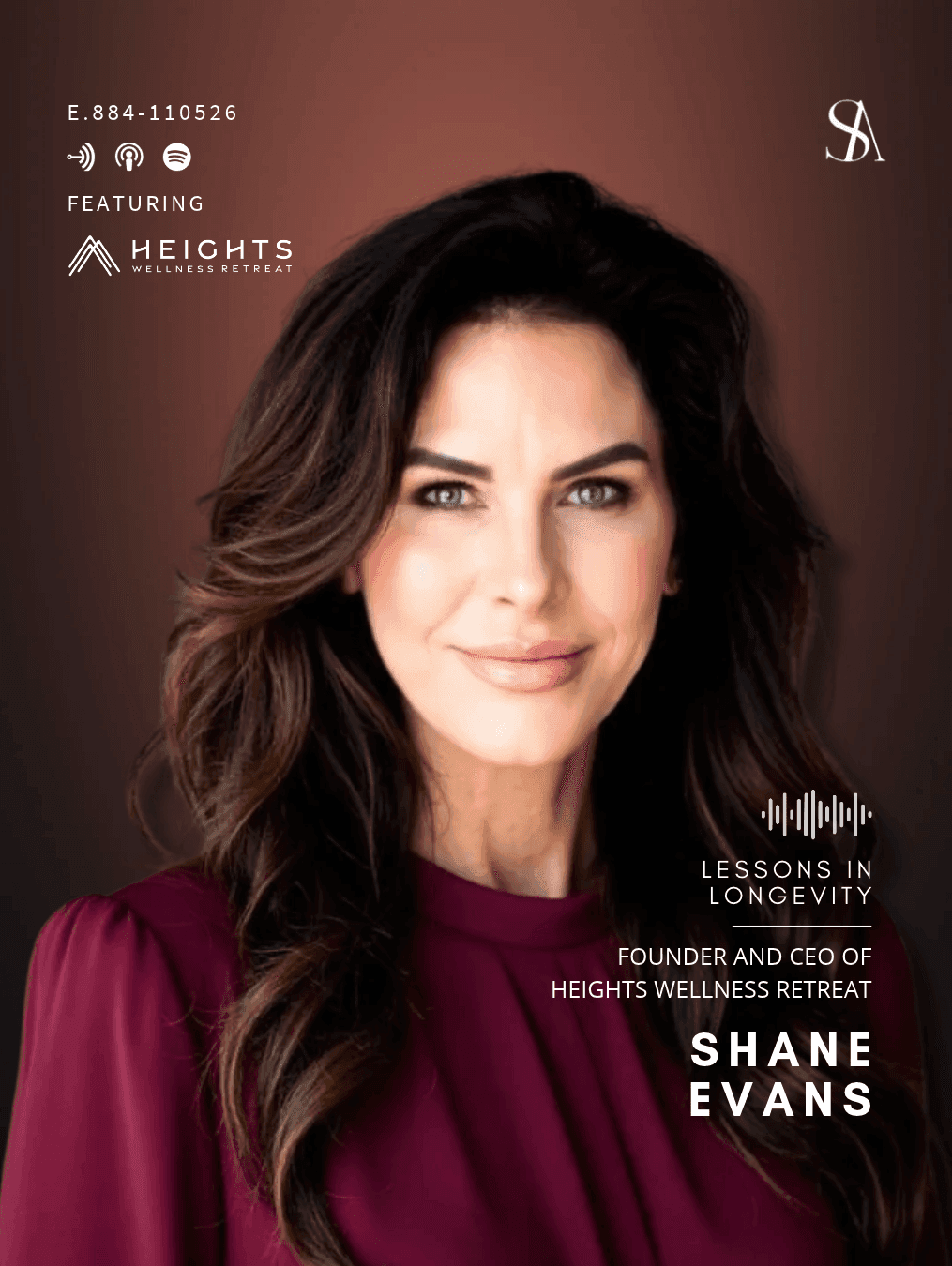
In this episode of Skin Anarchy’s longevity series, Dr. Ekta Yadav sits down with Shane Evans, founder of Massage Heights and CEO of Heights Wellness Retreat, to explore what longevity should look like beyond the trends. Drawing on more than two decades of experience building accessible wellness businesses, Evans discusses the science behind recovery modalities, the importance of consistency, the relationship between mental and physical health, and why the future of preventative wellness may depend less on expensive interventions and more on making everyday recovery accessible.
From Personal Pain to Building a Wellness Business
Shane Evans’ journey into wellness began with her own experience managing chronic lower back pain in her early 20s. After struggling to find relief through conventional approaches, she discovered massage therapy and experienced a significant improvement in her symptoms.
At the time, massage was largely positioned as a lux ry experience rather than a regular component of physical wellness. Treatments could be expensive, difficult to access, and inconsistent in quality.
Evans recognized an opportunity to change that perception.
In 2004, she founded Massage Heights with the belief that therapeutic massage should be accessible to people seeking ongoing support for pain, stress, and physical recovery — not simply those looking for an occasional spa experience.
The company introduced a membership-based model designed to make regular treatments more affordable and convenient. Over the following two decades, Massage Heights expanded to more than 100 locations, demonstrating that consumers were interested in incorporating therapeutic wellness services into their everyday lives.
That experience ultimately shaped Evans’ next venture, Heights Wellness Retreat, which expands the original concept beyond massage into a broader collection of recovery and wellness modalities.
Why Consistency Matters More Than Occasional Treatments
One of the central ideas throughout the conversation is that wellness outcomes depend heavily on consistency.
Evans argues that the problem with many wellness services isn’t necessarily the treatment itself, but the difficulty consumers face incorporating it into their routines.
A massage once a year may provide temporary relief, but regular treatments can offer a different experience. The same principle applies to exercise, sleep, hydration, meditation, and other health-supportive habits.
For Evans, accessibility therefore extends beyond affordability.
It also means having locations close to home or work, convenient scheduling, trustworthy practitioners, and an environment where people feel comfortable returning regularly.
This philosophy has influenced the evolution of Heights Wellness Retreat. Rather than building a business around one expensive or highly specialized treatment, Evans wanted to create a destination where consumers could access multiple wellness services in a consistent, approachable way.
Her larger argument is that longevity shouldn’t be defined by how many advanced interventions someone can afford. It should begin with the habits and resources people can realistically maintain.
Red Light Therapy, Sauna, and Cryotherapy: Separating Evidence From Hype
As longevity technologies become increasingly popular, consumers are encountering an expanding range of treatments marketed for recovery, inflammation, energy, and cellular health.
Evans discusses three modalities that have become particularly prominent: red light therapy, sauna, and cryotherapy.
Red light therapy is one of the technologies she finds most promising. She points to research investigating how specific wavelengths of light interact with biological tissues and may influence cellular processes involved in recovery.
However, she also emphasizes that not all devices are equivalent. Wavelength, device quality, and treatment parameters can influence the experience and potential outcomes.
Sauna is another modality Evans believes deserves attention. She discusses the growing body of research examining heat exposure and its potential relationships with cardiovascular health, recovery, and overall wellness.
Cryotherapy, meanwhile, represents an area where she believes the evidence is less established. Although users frequently report increased energy and improved post-exercise recovery, she acknowledges that more research is needed to understand its long-term benefits.
The discussion also raises an important limitation within longevity research: many studies involving recovery and performance have historically focused on men, leaving questions about how findings translate across different populations.
For Evans, these technologies can be valuable additions to a wellness routine, but they shouldn’t distract from the fundamentals that support health in the first place.
Longevity Begins With Understanding Your Baseline
One of Evans’ strongest messages is that consumers should understand their own health before investing heavily in advanced wellness interventions.
The longevity industry has introduced an enormous number of products, treatments, and protocols, but most people don’t have the time or resources to investigate every emerging technology.
Evans encourages consumers to begin with more practical questions.
Are you sleeping adequately? Are you hydrated? How are your stress levels? Are you exercising consistently? Have you discussed persistent symptoms or relevant health concerns with a qualified healthcare professional?
She also discusses the value of tracking personal health patterns through wearable devices such as the Oura Ring or Apple Watch.
These technologies can help consumers recognize how sleep, alcohol consumption, exercise, and other behaviors influence their daily recovery and perceived well-being.
For Evans, the purpose of tracking isn’t to become obsessed with every metric. It’s to better understand what helps an individual feel and function well.
This distinction becomes especially important as longevity culture increasingly promotes interventions originally developed or studied in elite athletic settings.
Most consumers aren’t professional athletes. Their recovery needs, schedules, and priorities may look very different.
Why More Biohacking Isn’t Necessarily Better
The conversation becomes particularly interesting when Evans addresses the growing popularity of peptides, injectable therapies, and increasingly elaborate biohacking protocols.
While she recognizes the scientific interest surrounding these technologies, she expresses concern about consumers experimenting with substances without adequate medical supervision.
She describes encountering individuals who purchase peptides through unverified sources or combine multiple compounds without fully understanding their potential effects.
For Evans, this raises questions about product quality, safety, appropriate monitoring, and whether individuals are addressing the underlying reasons they feel unwell.
She believes advanced interventions should never replace basic medical evaluation.
Someone experiencing persistent fatigue, discomfort, or other symptoms may benefit more from understanding their medical history, sleep patterns, nutritional status, and potential underlying conditions than from immediately introducing another supplement or injectable.
This philosophy has also influenced Heights Wellness Retreat’s business model.
Evans has deliberately chosen not to offer services such as IV therapy, injectable peptides, medical testing, or supplement prescribing within the company’s existing nonclinical model.
Instead, she believes those decisions belong with appropriately trained healthcare professionals.
Her goal is to create a complementary wellness environment rather than position the business as a substitute for medical care.
The Connection Between Skin, Gut Health, and Stress
As the conversation moves into beauty and skin health, Evans emphasizes that the skin cannot be understood independently from the rest of the body.
Stress, sleep, nutrition, hydration, and hormonal changes can all influence how skin looks and feels.
She reflects on how her own approach to skincare has evolved. Earlier in life, she was more likely to look for a new product whenever a concern appeared. Today, she is increasingly interested in understanding whether changes in her skin reflect something happening within her broader lifestyle.
The discussion also explores growing scientific interest in the gut-brain-skin relationship.
Research continues to investigate how intestinal health, immune signaling, inflammation, and the nervous system interact with skin physiology.
For Evans, this reinforces the importance of approaching wellness as an interconnected system rather than treating each concern in isolation.
Topical skincare can play a valuable role, but it cannot replace adequate sleep, appropriate nutrition, or the management of underlying health conditions.
The larger takeaway is that beauty and wellness are becoming increasingly connected because the biological systems influencing them have always been interconnected.
Why Nervous System Recovery Deserves More Attention
Beyond physical recovery, Evans believes one of the most overlooked aspects of longevity is the ability to regulate stress and create opportunities for mental restoration.
Her interest in this area is deeply personal.
She discusses her daughter’s experience with unexplained neuromuscular symptoms and how the search for supportive resources led her to investigate neuroscience, meditation, light-based technologies, and other approaches to wellness.
That experience reinforced her belief that recovery must include more than muscles and physical performance.
At Heights Wellness Retreat, services such as massage, meditation-oriented experiences, and vibroacoustic technology are intended to help guests relax and create space away from everyday stress.
Evans also discusses her personal experience attending a meditation retreat led by Dr. Joe Dispenza, whose work emphasizes the relationship between beliefs, behaviors, and personal change.
While some of the more expansive claims surrounding meditation and energy-based practices require further scientific validation, the conversation highlights an important principle: psychological well-being and stress management deserve a meaningful place within discussions of long-term health.
For Evans, even simple practices such as breathing exercises, short periods of meditation, and intentionally disconnecting from daily pressures can be valuable starting points.
Creating a Wellness Space That Goes Beyond Treatments
One of the most distinctive aspects of Heights Wellness Retreat is Evans’ effort to create an environment where consumers don’t necessarily need to purchase a treatment every time they visit.
The company developed a communal space called The Well, designed to encourage guests to relax, read, connect with others, or simply spend time away from their usual responsibilities.
The concept emerged partly from conversations with Evans’ daughter about the growing need for accessible spaces that support connection and restoration.
Rather than viewing wellness exclusively as a service someone receives, Evans wanted to create a place where people could feel comfortable simply being present.
This reflects another important theme throughout the episode: the relationship between social connection and health.
Loneliness and social isolation have become increasingly important public health concerns, and Evans believes wellness businesses have an opportunity to create environments that encourage meaningful human interaction.
Heights Wellness Retreat has consequently incorporated community events and shared spaces alongside its treatment offerings.
The goal is to create an experience that supports not only physical recovery but also the emotional and social dimensions of well-being.
Scaling Wellness Without Losing the Human Experience
Evans’ experience building more than 100 Massage Heights locations offers a unique perspective on the business challenges facing the rapidly expanding wellness industry.
Scaling a service-based business is fundamentally different from scaling a product company.
Every location depends on people delivering consistent experiences, maintaining standards, and creating relationships with guests.
Evans explains that franchising has been central to the company’s growth, but choosing the right franchise partners is just as important as selecting the right locations.
She emphasizes the need to align operators around the company’s values, service expectations, and long-term goals.
At Heights, the company uses a guest-experience framework called Cloud Nine, which encourages teams to understand how someone feels when they arrive and work toward helping them leave feeling better.
The system also provides a way to evaluate consistency across locations.
Evans believes that a brand’s promise is only meaningful if consumers experience it consistently, regardless of which location they visit.
That requires clear operating systems, employee training, accountability, and ongoing communication with franchise owners.
For entrepreneurs entering the longevity and wellness space, her experience illustrates that scaling successfully requires more than identifying a popular treatment. It requires building an organization capable of delivering quality repeatedly.
The Future of Wellness Is More Accessible and Personalized
Looking ahead, Evans expects the wellness industry to place greater emphasis on preventative care, women’s health, nervous system regulation, and personalized recovery.
She believes consumers will increasingly seek services that help them feel better before significant health problems develop.
However, she also hopes the broader healthcare system will evolve to support preventative wellness more effectively.
Today, many consumers pay out of pocket for services they believe support their long-term health, while insurance coverage remains largely focused on diagnosing and treating established medical conditions.
Evans sees an opportunity for greater integration between traditional healthcare and complementary wellness services, provided appropriate professional boundaries remain in place.
She also expects demand for community-centered wellness environments to continue growing.
Rather than visiting multiple specialized businesses for different treatments, consumers may increasingly prefer trusted destinations that offer a range of recovery services within one environment.
For Evans, the future of longevity isn’t simply about introducing more technology. It’s about making meaningful wellness practices easier to access, understand, and maintain.
Looking Ahead
Shane Evans’ approach to longevity challenges the idea that living healthier requires an increasingly complicated collection of interventions.
Red light therapy, sauna, cryotherapy, and other recovery technologies may have a place within a broader wellness routine, but they are not substitutes for the fundamentals.
Sleep, hydration, movement, stress management, medical oversight, and meaningful social connection remain essential parts of long-term health.
Through Massage Heights and Heights Wellness Retreat, Evans has spent more than two decades working to make therapeutic wellness services more accessible and consistent.
Her philosophy is ultimately centered on a simple idea: longevity should help people live better now, not simply promise that they might live longer in the future.
As the industry continues to evolve, the opportunity may lie in creating environments that support the whole person while helping consumers make informed decisions about which interventions genuinely belong in their lives.
Listen to the full episode of Skin Anarchy to hear Shane Evans discuss the evolution of accessible wellness, the science and limitations of popular recovery technologies, the risks of unsupervised biohacking, the importance of nervous system regulation, and why the next generation of longevity may be defined by consistency, community, and preventative care.