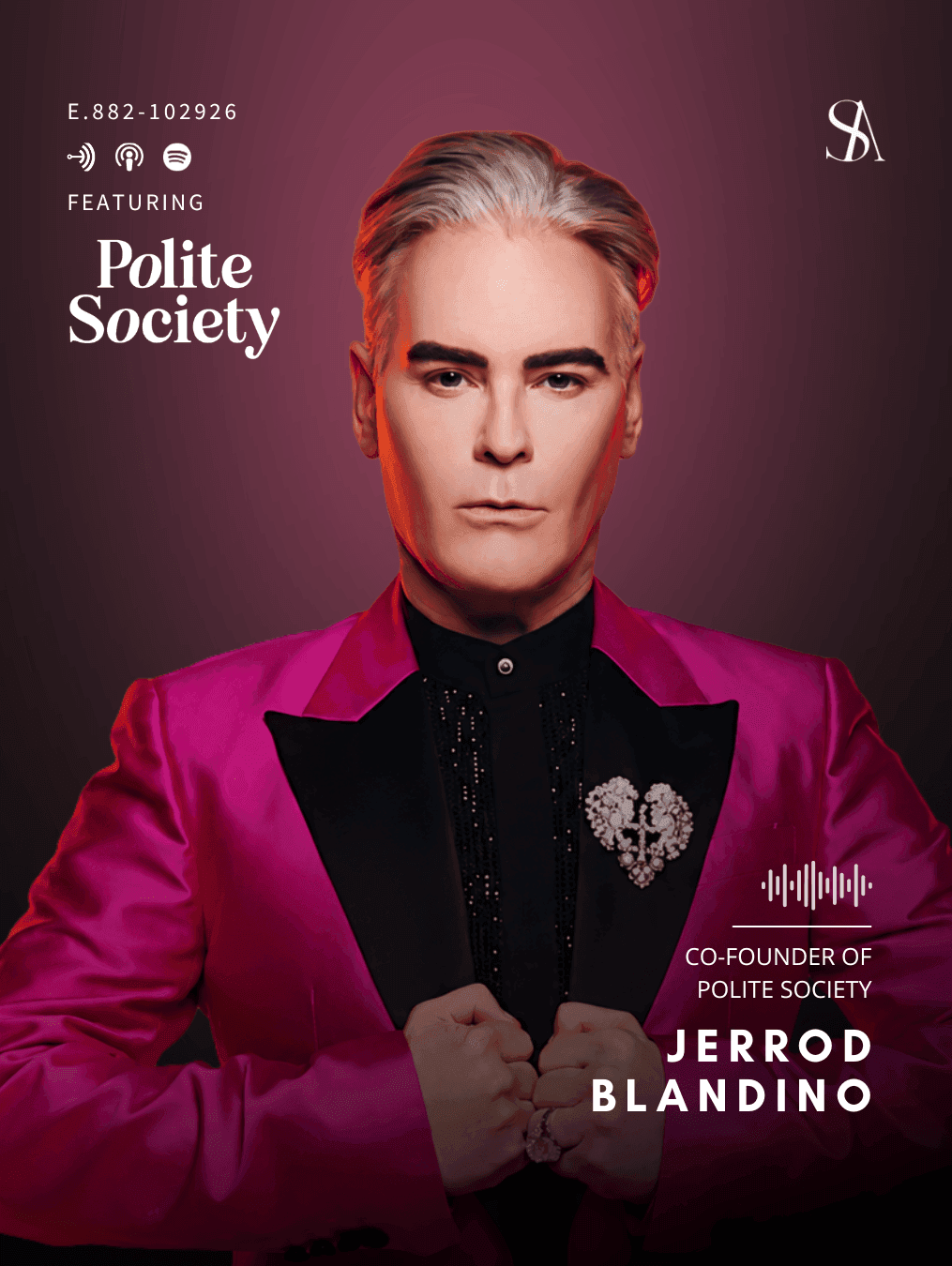
Jerrod Blandino, cofounder of Too Faced and now Polite Society, returns to Skin Anarchy to talk about building a beauty brand the hard way: self funded, formula first, and without celebrity hype. He unpacks what real success looks like, the private equity trap, and why the industry is overdue for a clearing out.
Why did Jerrod Blandino start Polite Society after Too Faced?
To get creative freedom back. After 24 years building Too Faced and selling it to Estee Lauder, Blandino found the final years creatively stifling, so he launched Polite Society within a day of his non compete ending. "It reinvigorated that fire under my ass to be creative again and be rebellious again," returning to the organic, fan first approach that built his first brand.
How do you build a beauty brand without celebrities?
By meeting the customer directly and letting the product prove itself. Blandino deliberately avoids big celebrity faces so the brand is not absorbed into someone else's personality. "We're creating a world that I want to live in... and together we can be happy here," building a relationship rather than renting someone's fame.
What does a formula first approach mean?
Letting the formula lead instead of the packaging or story. In his old life a theme or package might lead; at Polite Society the formula comes first. "When you pick a product up, it serves and it delivers on its promise," Blandino says, and when the payoff surprises you, it becomes something you repurchase.
Why do so many hyped products disappoint?
Because marketing outran the formula. Blandino says there is more great product than ever, but also more "crap," as private equity chased quick money over passion. "They promise you the world, and you get it home and you're like, is it me? Am I using this wrong?" The fix is formulas that genuinely deliver.
What makes a product a true staple?
Owning the formula from the beginning rather than relabeling a stock one. Blandino contrasts founders who develop from scratch with brands that buy an off the shelf formula and add a name. "You don't always have to invent it, but you have to put your own spin on it," he says, which is costlier but creates products rivals cannot reproduce.
Why did Blandino keep Polite Society self funded?
To never answer to anyone again. Having lived through both supportive and destructive private equity relationships, he and his partner funded the brand themselves to protect control. "It really is about maintaining control, artistic integrity, and keeping your vision tight," recalling an executive who once threatened to destroy everything they built.
Should beauty brands target teenagers?
Not with potent formulas, in his view. Blandino argues Wall Street turned beauty into entertainment for 14 year olds, but strong actives are not made for young skin. "Efficacious formulas are not made for fragile young skin," he says, noting Polite Society performs across Gen X, millennials, and Gen Z by pairing glamour with formulas that work.
What gives a brand lasting power?
A heartbeat that comes from the founder. Blandino says the thing customers feel, and keep coming back for, is authenticity that cannot be bought. "Your brand has to have a heartbeat... and if I see something that does not strengthen the heartbeat, it's gotta go," protecting that emotional connection above hype or logo.
Where is the beauty industry headed?
Toward a clearing out of the noise. Blandino believes distrust and oversaturation have made products stop hitting the way they used to, and that quality will rise as the clutter thins. "You're going to see quality rise and really unique individual, special brands strengthen," predicting more genuine creative moments will break through again.
Listen to the full episode with Jerrod Blandino of Polite Society on Skin Anarchy, available wherever you get your podcasts.