It took approximately 3,000 hours to bring a golden eagle to life for LAIKA Studios’ Wildwood. The character, known as The General, was built by hand for the stop-motion film, which required artists to construct an entire world of miniature sets, practical puppets, costumes, and carefully arranged details. On screen, the eagle appears to move effortlessly through its surroundings. Behind that performance are thousands of hours of sculpting, building, painting, and animating, with each movement created through a series of painstaking adjustments. At a time when artificial intelligence can generate elaborate images and entire visual worlds in moments, the amount of work behind one fictional character is almost difficult to imagine. It also raises a question that extends well beyond filmmaking: as technology makes it easier to create and consume images, are we becoming more interested in the people and creative decisions behind the things we see?
LAIKA’s Wildwood, which opened in theaters on October 23, 2026, follows a teenage girl who ventures into an enchanted forest after her infant brother is taken by a murder of crows. Based on Colin Meloy’s novel, the film took years to develop and involved 136 sets and 231 practical puppets (Coyle, 2026). Stop-motion animation depends on artists physically adjusting characters between photographs, sometimes moving a puppet by such small increments that the changes are almost impossible to notice individually. Thousands of images are then brought together to create the illusion of movement. Sculptors, costume designers, fabricators, animators, and technicians all contribute to a performance that would not exist without their combined work.
For director Travis Knight, that labor is part of what makes the medium meaningful. In an interview with the Associated Press, he described stop-motion as a “quiet act of rebellion,” pointing to the care and devotion involved in making something by hand at a time when digital tools can produce images almost instantly (Coyle, 2026). The appeal is not simply that the film uses an older technique. It is that the process leaves evidence of the people who made it. The characters have physical expressions, textures, costumes, and imperfections that come from the decisions of the artists who brought them to life.
That distinction is becoming increasingly relevant in other creative industries, particularly beauty, where artificial intelligence is beginning to influence how products are developed, marketed, and experienced. The technology is no longer limited to generating campaign images or editing photographs. In June 2026, L’Oréal announced a collaboration with OpenAI that would explore AI applications across research, science, marketing, and personalized consumer experiences. The partnership includes using AI to study the skin microbiome and support the development of future skincare, as well as tools intended to help creative teams produce imagery and video (L’Oréal, 2026).
For cosmetic researchers, these applications could change how long certain stages of product development take. A 2025 review published in Cosmetics examined how artificial intelligence and machine learning can support cosmetic formulation, including ingredient selection, predictive safety assessments, and the evaluation of product stability. The researchers also noted that these systems depend on reliable data, appropriate validation, and careful regulatory oversight (Di Guardo et al., 2025). AI may help researchers process information and identify promising possibilities, but deciding whether a formula is safe, effective, and suitable for consumers still requires scientific judgment and expertise.
The technology is also changing the way beauty brands tell stories. Too Faced, for example, worked with Adobe’s Firefly tools to create a campaign for its Ribbon Wrapped Lash Mascara, using generative AI to develop a fantasy-inspired visual world around the product. The creative team used the technology to experiment with scenes and refine the final campaign, describing the process as a combination of AI tools and human creative direction (Thalapaneni, 2025). It is an example of how brands can use new technology to move from an initial idea to a finished visual more quickly, while creative teams remain responsible for the decisions that give the work its character.
But the growing presence of AI in advertising has also made consumers more attentive to what they are being shown. Beauty campaigns have long relied on retouching, filters, carefully controlled lighting, and idealized representations of skin. Generative AI introduces another layer, making it possible to create people, settings, and product imagery that may never have existed outside a screen. For consumers, the distinction between an image that has been edited and one that has been entirely generated can become difficult to recognize, particularly when the content is designed to look like an authentic product experience.
A Gartner survey of 1,006 U.S. consumers, conducted between May and June 2026, found that 65% believed brands were producing too much AI-generated content in their marketing, while 57% said the growing presence of that content had made them less trusting of brand messaging (Gartner, 2026). The findings do not suggest that consumers reject every use of AI. Instead, they point to a growing awareness of how much content is being produced and a desire for brands to offer something that feels credible, distinctive, and worth paying attention to. In beauty, where trust is closely tied to product claims and visible results, that distinction matters.
When the Experience Is Part of the Product
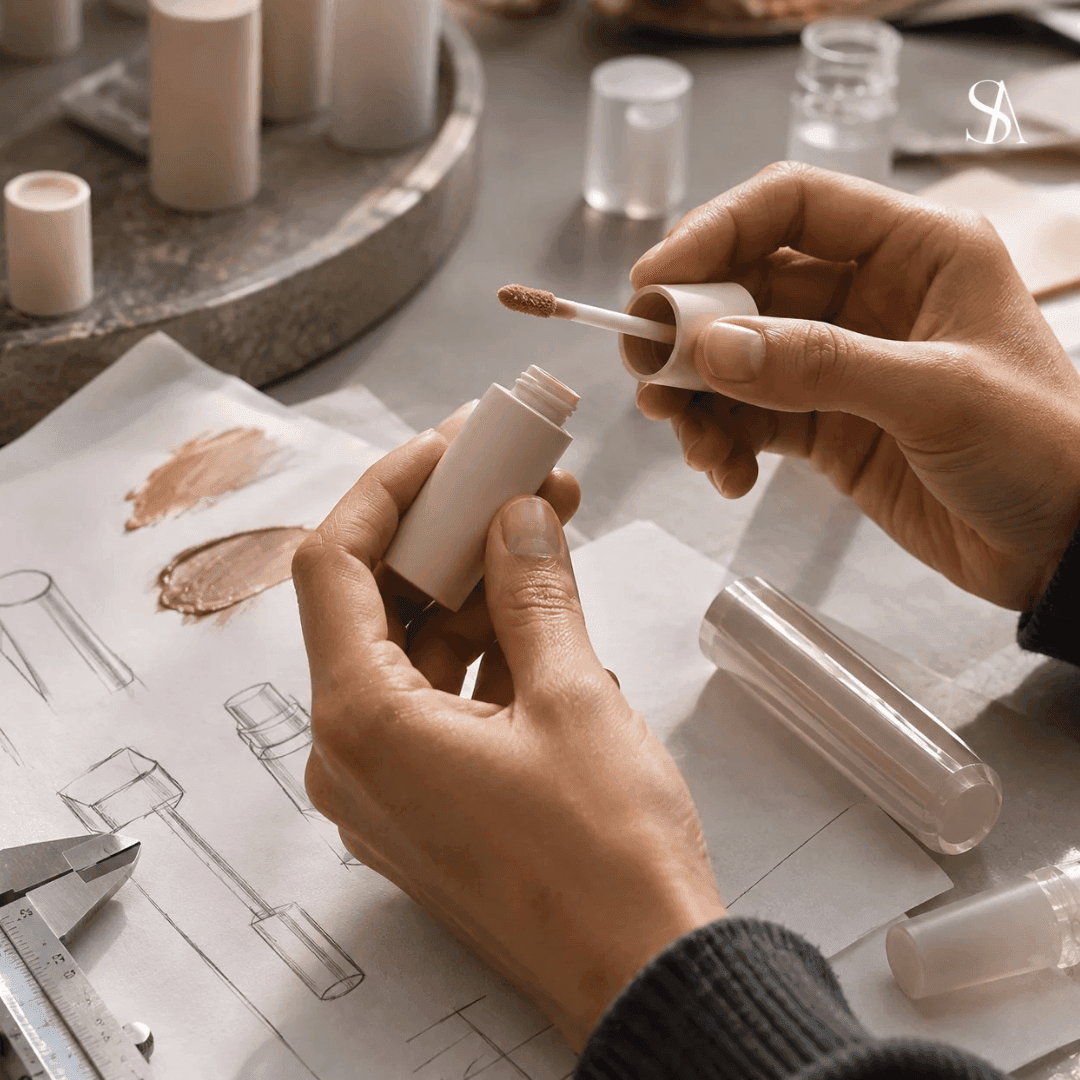
One place where the value of human creativity becomes especially tangible is packaging. A beauty product can make an impression before anyone has tried the formula, whether through the weight of a compact, the shape of a fragrance bottle, or the way an applicator feels against the skin. These details are easy to overlook when shopping online, but they can influence how someone experiences a product once it is in their hands. In a market where new launches appear almost daily, the physical experience can help a product become memorable beyond its ingredients or marketing claims.
Packaging designers are increasingly treating applicators as an important part of that experience. In a September 2026 report for Cosmetics Business, Julia Wray explored the growing use of tactile beauty applicators, including cooling metal tips, soft-touch materials, precision tools, and massage components. Mateia Crippa of packaging company Quadpack described the applicator as a physical point of contact between a brand and its customer, while other industry experts discussed how different materials can change the sensation and precision of application (Wray, 2026).
Consider the difference between dispensing a serum from a standard dropper and applying it with a cooling metal tip designed to glide around the eyes. The formula may remain the reason someone buys the product, but the applicator changes how it is used. A soft silicone surface can create a different sensation from a metal roller, while a precision tip can make it easier to apply a treatment to a specific area. These choices involve more than visual appeal. Designers must consider materials, hygiene, dosage, comfort, manufacturing, and how the component will work with the formula.
The same is true in packaging. The final experience is shaped by decisions that may never be visible to the person using it. A small adjustment to a puppet's expression can change the feeling of a scene; the curve of an applicator or the weight of a container can influence whether a product feels comfortable, practical, or distinctive. Packaging also has a life beyond its original purpose. Fragrance bottles, sculptural compacts, decorative palettes, and carefully designed skincare jars sometimes become objects people keep on a vanity long after the product inside has been used. A distinctive shape, illustration, or material can make a functional container feel worth displaying, photographing, or collecting. In these cases, design becomes part of the product’s identity, giving consumers something to connect with beyond the formula itself.
That does not mean beautiful packaging is automatically thoughtful packaging. As Mintel’s 2026 analysis of beauty packaging points out, brands are balancing visual appeal with practical concerns such as convenience, hygiene, and sustainability. Refillable containers, recyclable materials, and reusable systems may sound appealing, but they also have to work for the people expected to use them. Mintel identifies convenience as a major obstacle to wider adoption of refill systems, with consumers often finding in-store refilling inconvenient (Holschuh, 2026). A package can look innovative, but if it is difficult to open, refill, clean, or recycle, the design has not fully addressed the needs of the person buying it.
The creative decisions behind packaging can also be seen in collaborations between beauty brands and artists. An illustrator’s work on a limited-edition palette or a designer’s interpretation of a fragrance collection can give a familiar product a new visual identity. The value of these collaborations is not simply that a package looks different. They bring another creative perspective into the process, often allowing an artist’s work to reach an audience that might not otherwise encounter it. In a crowded marketplace, that individual point of view can make a product stand apart.
Why Consumers Still Want to Touch, Try, and Discover
The interest in physical experiences extends beyond beauty. After years of discovering trends, shopping, and interacting with brands through screens, consumers continue to place value on being able to see and handle what they are considering. Research conducted by The Harris Poll on behalf of Quad in 2026 found that 80% of respondents felt brands that appeared human and imperfect were more memorable than those presenting AI-generated perfection. The study also found that 64% would pay a premium for products guaranteed to be human-designed or handcrafted (The Harris Poll and Quad, 2026). The research was commissioned by a marketing company and should be read in that context, but it points to something brands can act on.
For beauty, the difference between viewing a product online and encountering it in person can be particularly noticeable. A photograph may show the color of a lipstick, but it cannot fully communicate its texture or how it feels during application. A fragrance description can list its notes, but smelling it allows someone to experience how those notes develop. Even testing a moisturizer can provide information that a product page cannot reproduce. These sensory details do not replace ingredient information or evidence of efficacy, but they add another dimension to how consumers evaluate what they are buying.
This helps explain why physical retail, pop-ups, demonstrations, and immersive brand experiences remain useful ways for companies to connect with customers. A fragrance installation that allows visitors to explore different scent notes, a makeup launch featuring an artist working in person, or a skincare demonstration that lets people test a product offers something beyond another campaign to scroll past. The experience gives consumers an opportunity to interact with a brand rather than simply receive a message from it.
Of course, a visually impressive activation does not automatically create a meaningful connection. What often makes an experience memorable is the interaction itself: the artist explaining a technique, the expert answering questions, or the opportunity to handle a product and discover how it works. These moments bring the creative process closer to the consumer and can make an industry that sometimes feels distant or highly technical more accessible.
The People Behind the Work
A beauty product passes through many hands before it reaches a consumer. Cosmetic chemists develop and refine formulas, packaging designers consider how a product will be held and used, manufacturers work through the practical demands of production, and artists and creative directors determine how a brand will present it to the world. Much of this work happens long before a product appears on a shelf, which can make the industry feel anonymous even when the decisions behind a launch are highly specialized.
Making those people more visible can change how consumers understand what they are buying. A formulator can explain why certain ingredients were selected and what challenges arose during development. A packaging designer can describe why a particular material or applicator was chosen, while a perfumer can explain how a fragrance moves from an initial idea to a finished composition. These details give audiences a way to understand a product beyond its advertising and provide a more complete picture of the work involved in bringing it to market.
There is, however, a difference between showing the people behind a product and simply using words such as handmade, artisanal, or authentic as marketing language. A product does not become more thoughtful because a brand describes it that way, just as a handmade object is not automatically more sustainable or effective. Consumers are increasingly surrounded by claims about craftsmanship and authenticity, which makes it important for brands to explain what those words actually mean. Showing the people involved, describing the decisions behind the design, and being transparent about the production process can offer a more convincing account than relying on a label alone.
The same question applies to AI. Technology can help a creative team explore ideas, speed up certain tasks, and produce work that might once have required more time or resources. But the presence of a new tool does not tell us whether the final result is original, useful, or meaningful. Those qualities still depend on the choices made throughout the process: what a team decides to create, what it chooses to leave out, and how it understands the people who will eventually encounter the finished work.
Making Room for What Comes Next
It would be easy to frame the renewed interest in handmade work as a reaction against artificial intelligence, but that would overlook how much contemporary creativity already depends on a combination of physical and digital tools. LAIKA’s Wildwood is a useful example. Its production brings together practical puppets and miniature sets with computer-generated effects and other advanced techniques. The technology does not erase the work of the artists who build the characters and environments or the animators who give them movement. Instead, it becomes part of a larger process shaped by people with a clear creative vision.
The beauty industry is moving through a similar transition. AI may help researchers analyze ingredients, support formulation decisions, personalize product recommendations, or give creative teams new ways to develop campaigns. Packaging designers may use digital tools to test shapes and materials before a physical prototype is made. Brands may reach consumers through virtual experiences while still offering opportunities to touch, test, and understand products in person. These approaches do not have to compete with human creativity, but they do make transparency about the process increasingly important.
The question is not whether every product or campaign needs to be made entirely by hand. It is whether the people behind the work remain visible in a culture where the finished image can be generated, edited, and distributed with unprecedented speed. Consumers may not need to know every person involved in every product they buy, but they should be able to understand what a brand is claiming, how a product was developed, and where technology has played a role.
As technology continues to change how things are made and presented, the human touch can be found less in rejecting new tools than in understanding who is using them, what they bring to the process, and why the work matters.